If you need to update an Attribute Set, Sales Layer offers two main ways to access the form editor:
- From an item form: open the item you want to edit, such as a product or category, and click Actions > Redesign form.
- From the form editor: go to the table you want to work with, such as Products, Variants, or Categories, and click Actions > Edit forms.
Both routes allow you to edit the structure that controls which fields are available in the Attribute Set.
What you can update in an Attribute Set
When editing an Attribute Set, you can:
- Move fields between tabs.
- Add a new field.
- Reuse an existing field.
- Recover an unused field.
- Rename a field.
- Change a field type.
- Remove a field from the Attribute Set.
- Create new tabs.
- Create sections within a tab.
- Remove empty pages and unused fields.
These updates change the form structure used by the products assigned to the Attribute Set.
Move a field
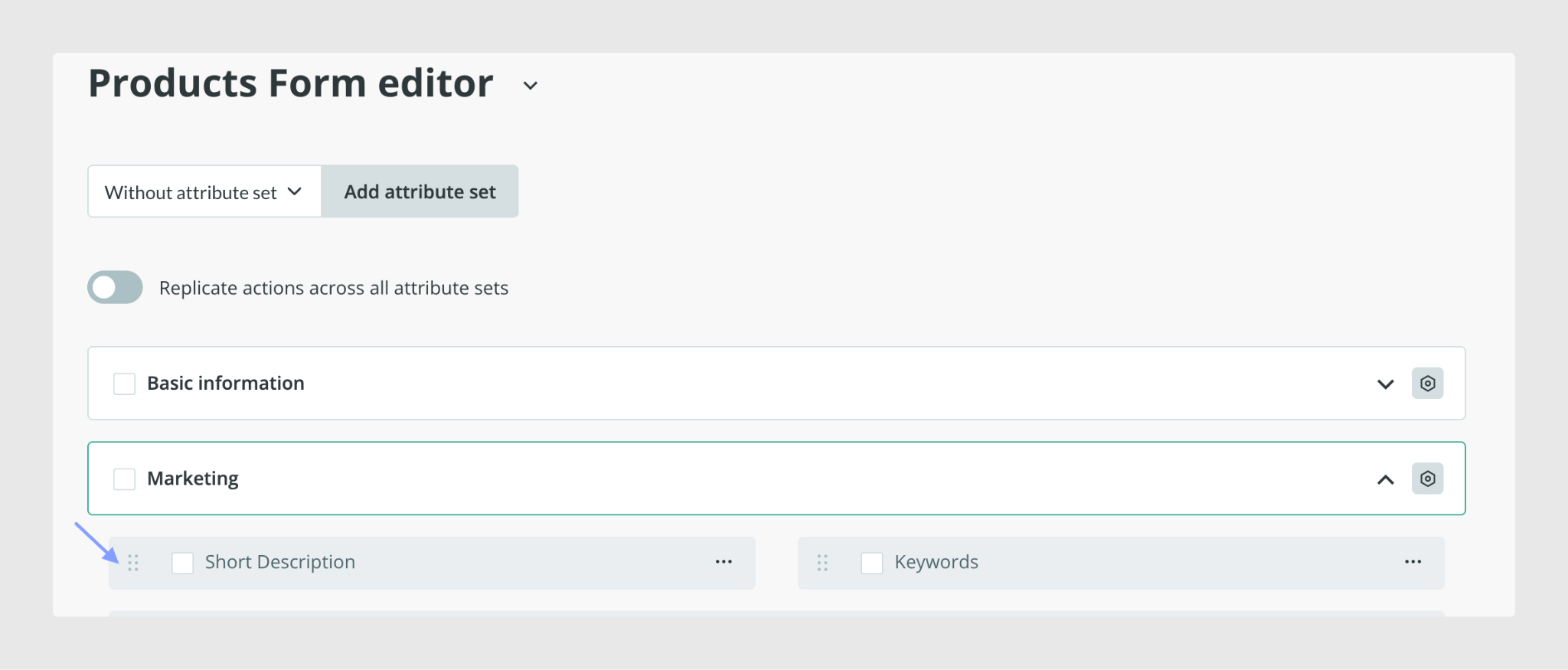
There are three ways to move a field within the form editor:
1. Click and drag the six dots displayed to the left of the field.
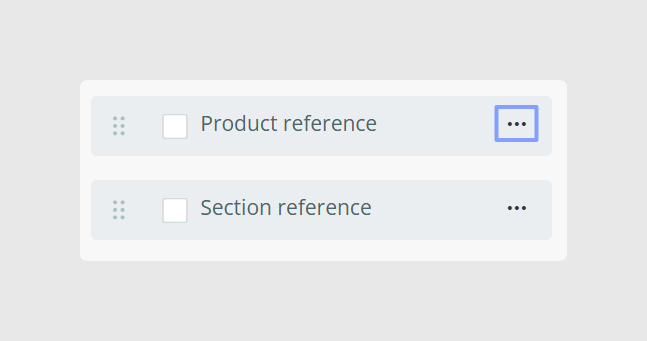
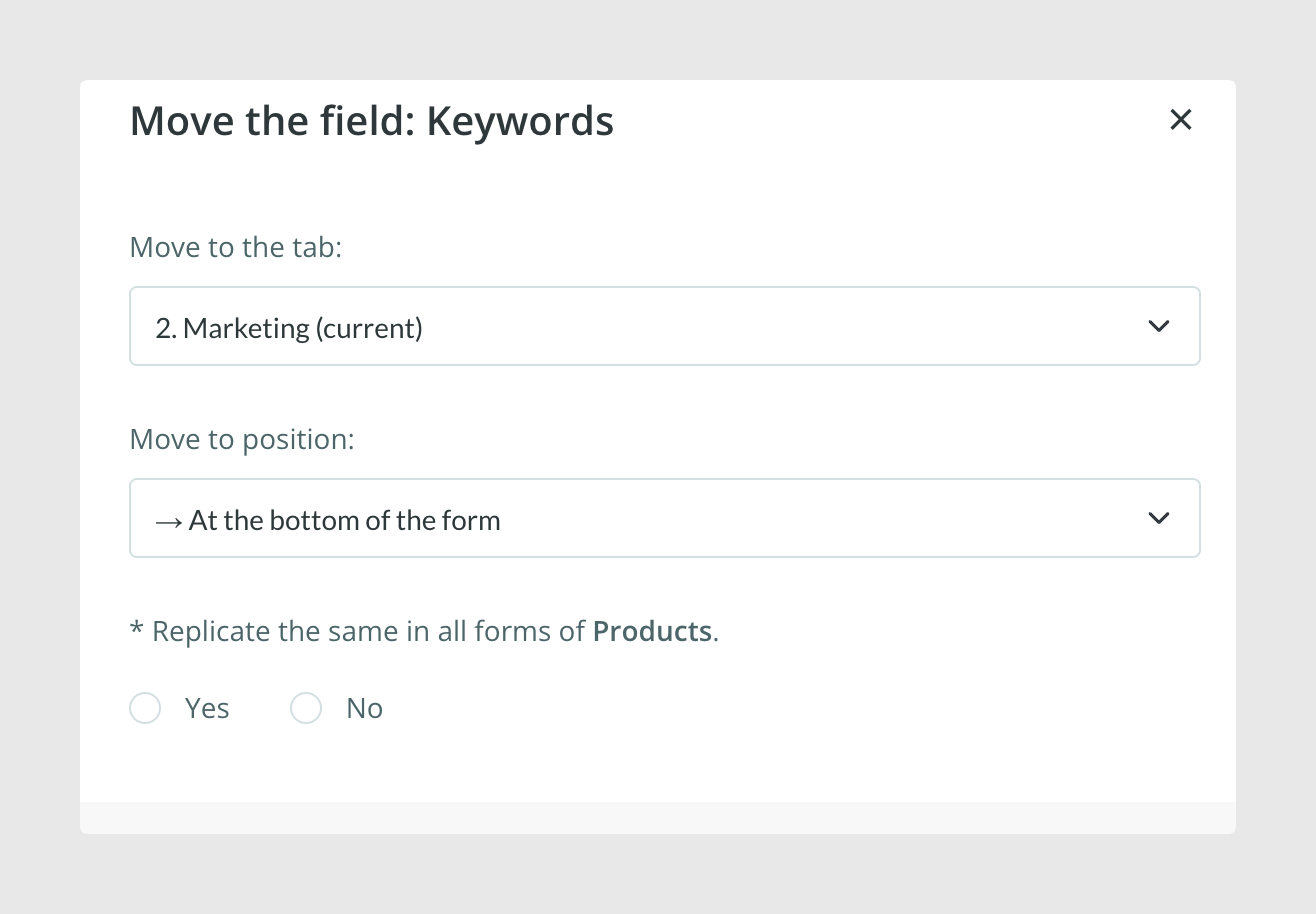
2. Click the three dots to the right of the field you want to move and select Move.
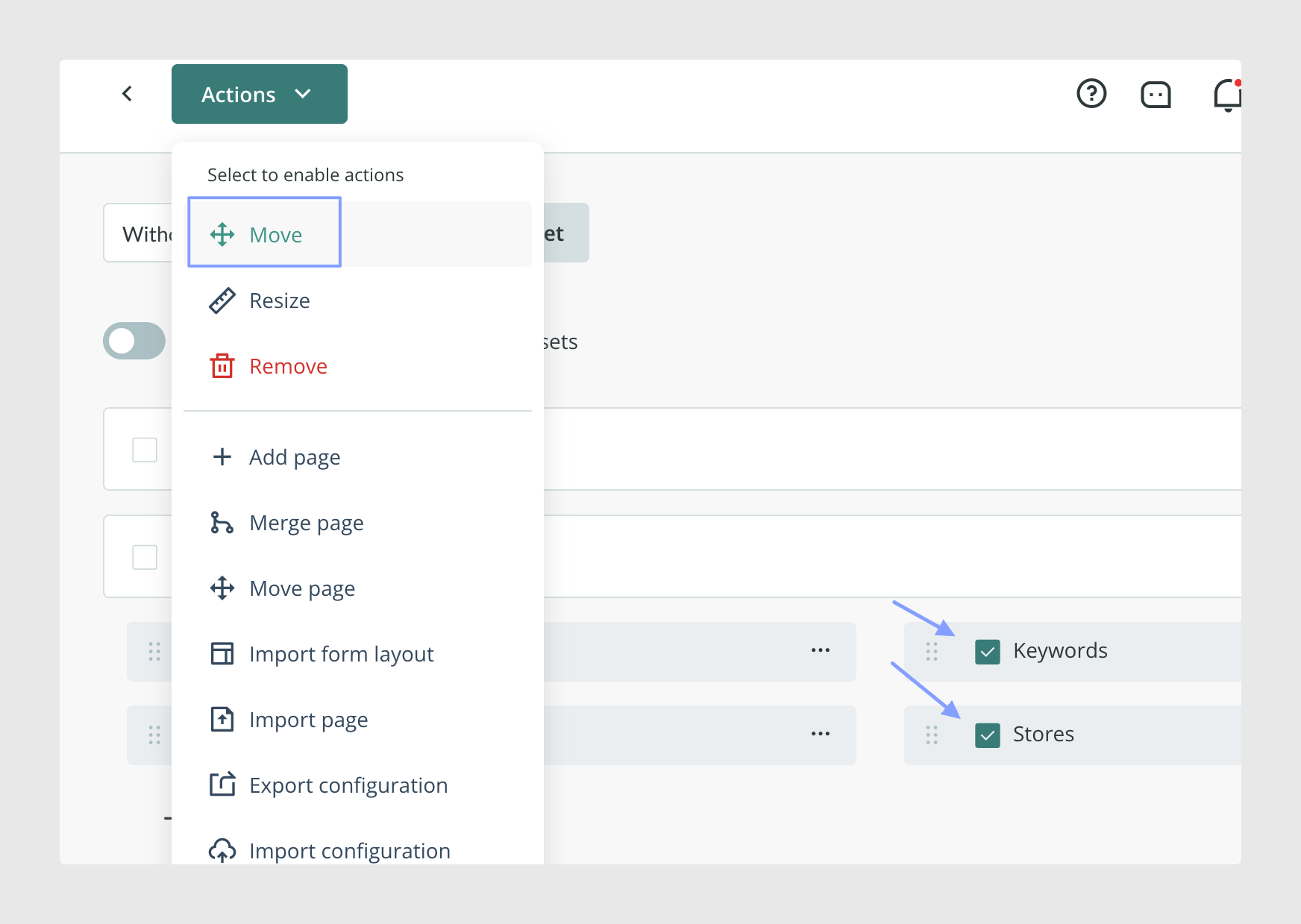
3. You can also move several fields at once. Select them using their checkboxes and go to Actions > Move.
Note: some basic fields must remain in the first tab, Basic information. These include the Attribute Set field, product name, product reference, category reference, product image, and description.
Add a new field or reuse an existing one
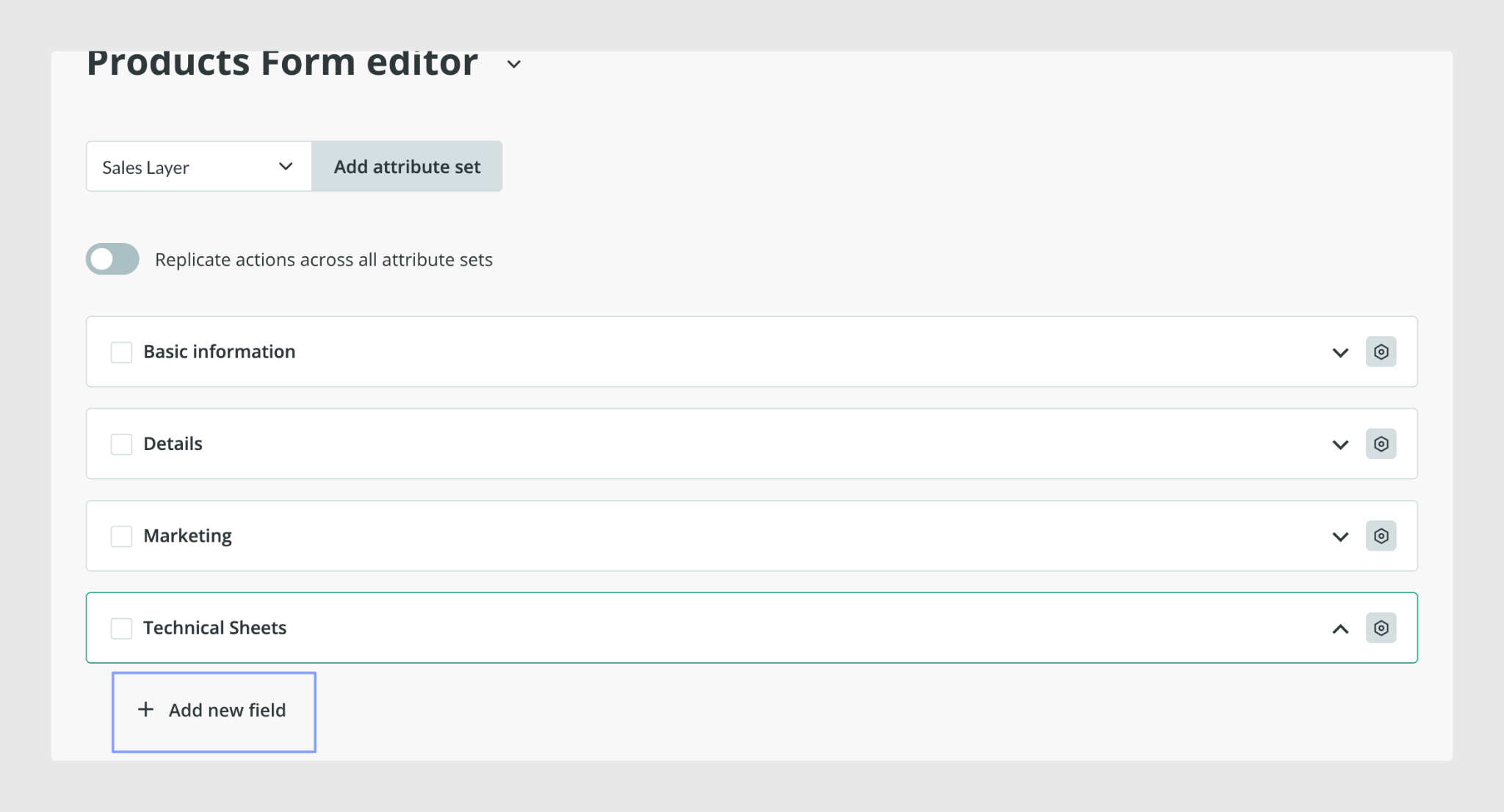
To expand the form, select Add new field in the form editor.
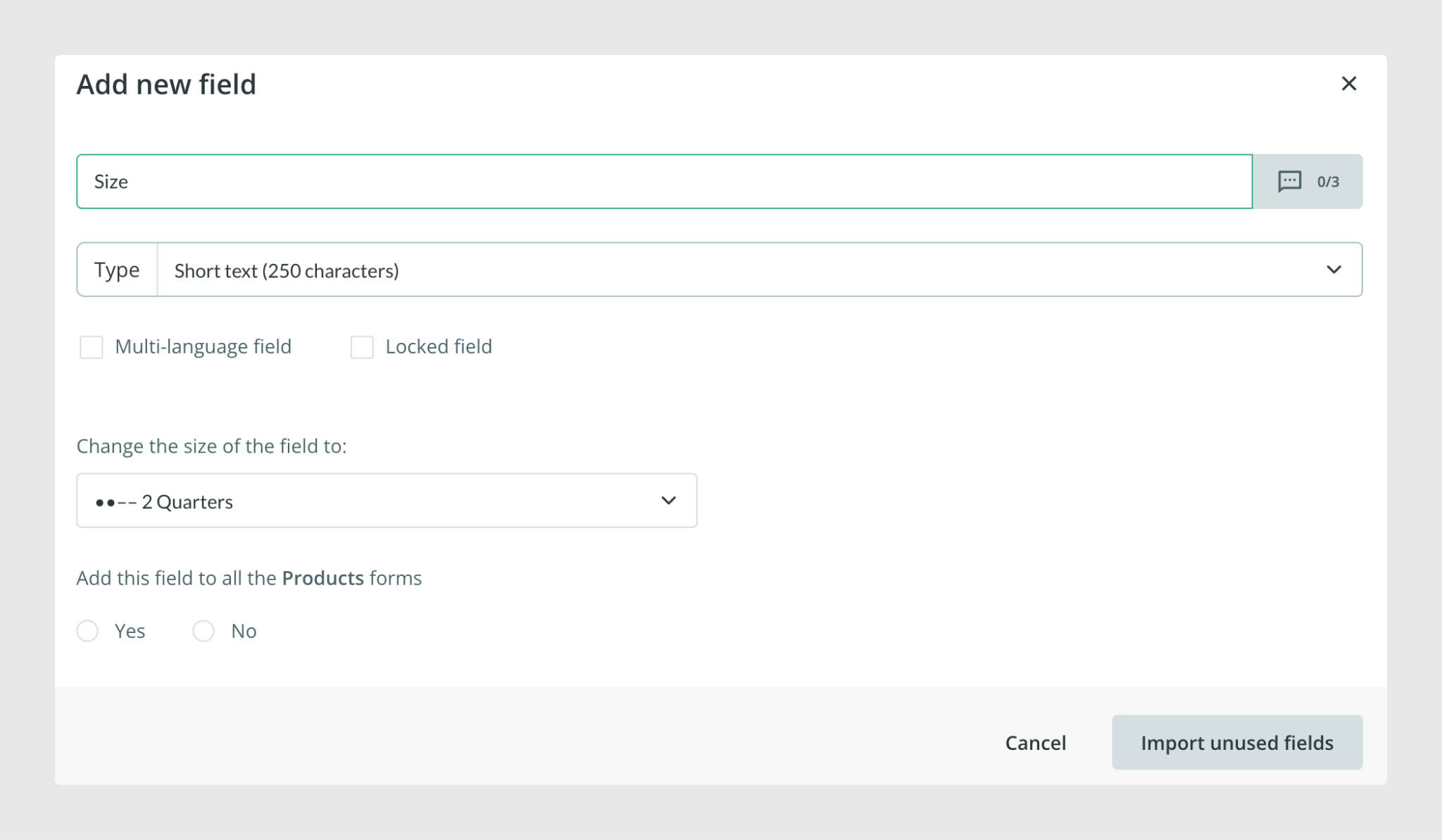
From this option, you can create a completely new field or select a field that already exists in another Attribute Set. Reusing an existing field is usually the best option when the same information is required in different structures.
Recover unused fields instead of creating duplicates
Some fields may already exist in the platform but remain outside the current form. This can happen when a field was created during an import but none of the items contained a value for it.
To recover one of these fields:
- Open the form editor.
- Click Add new field.
- Select the existing unused field instead of creating a new one.
If more than one unused field is available, the Import unused fields option may also appear, allowing you to recover several fields at once.
Creating a new field instead of reusing the existing one may create duplicate fields in the platform.
Create a new tab or section
If the form is difficult to navigate, you can reorganize it by adding tabs or sections.
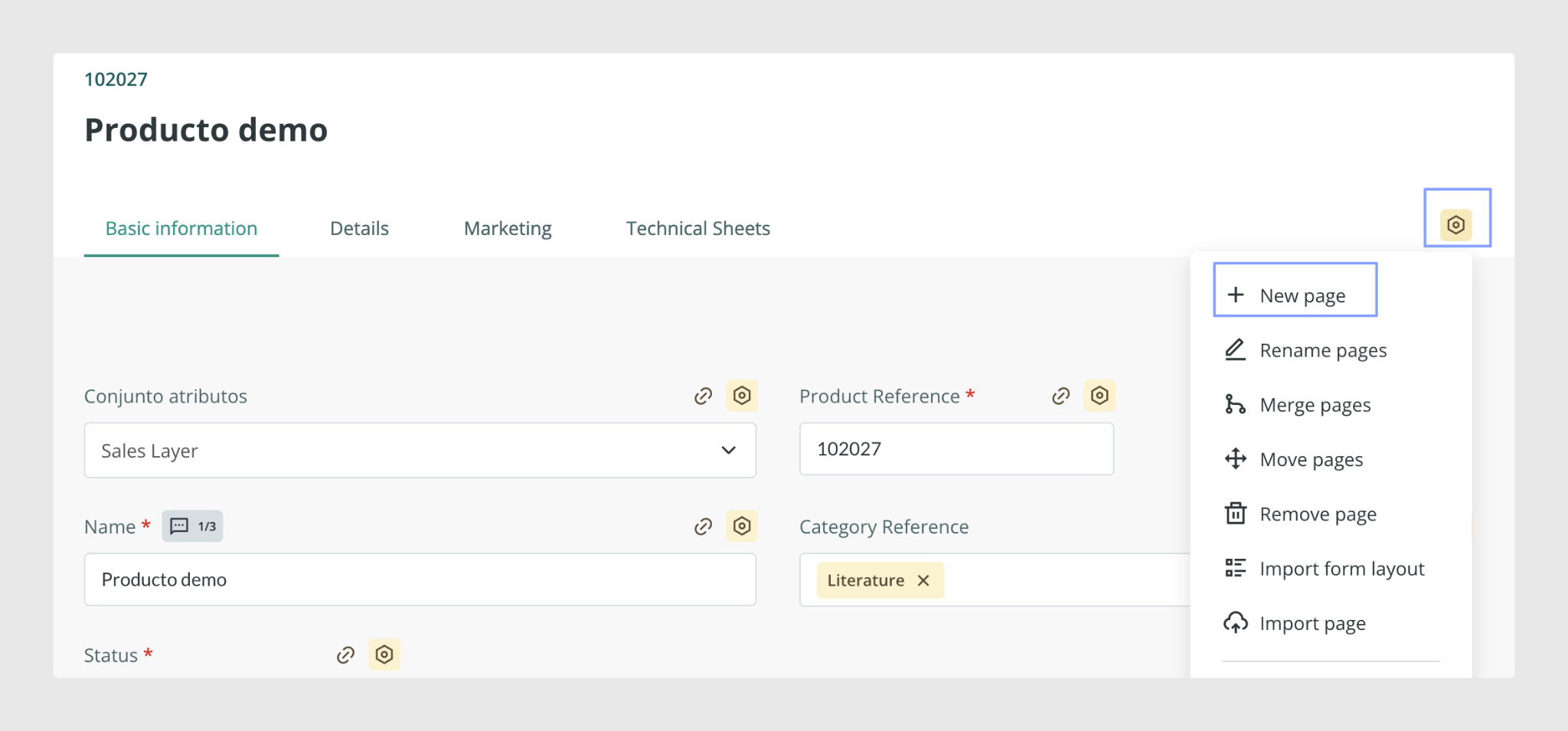
To add a new tab from a product form:
- Open the product form.
- Go to Actions > Redesign form.
- Click the yellow button on the right.
- Select Add page.
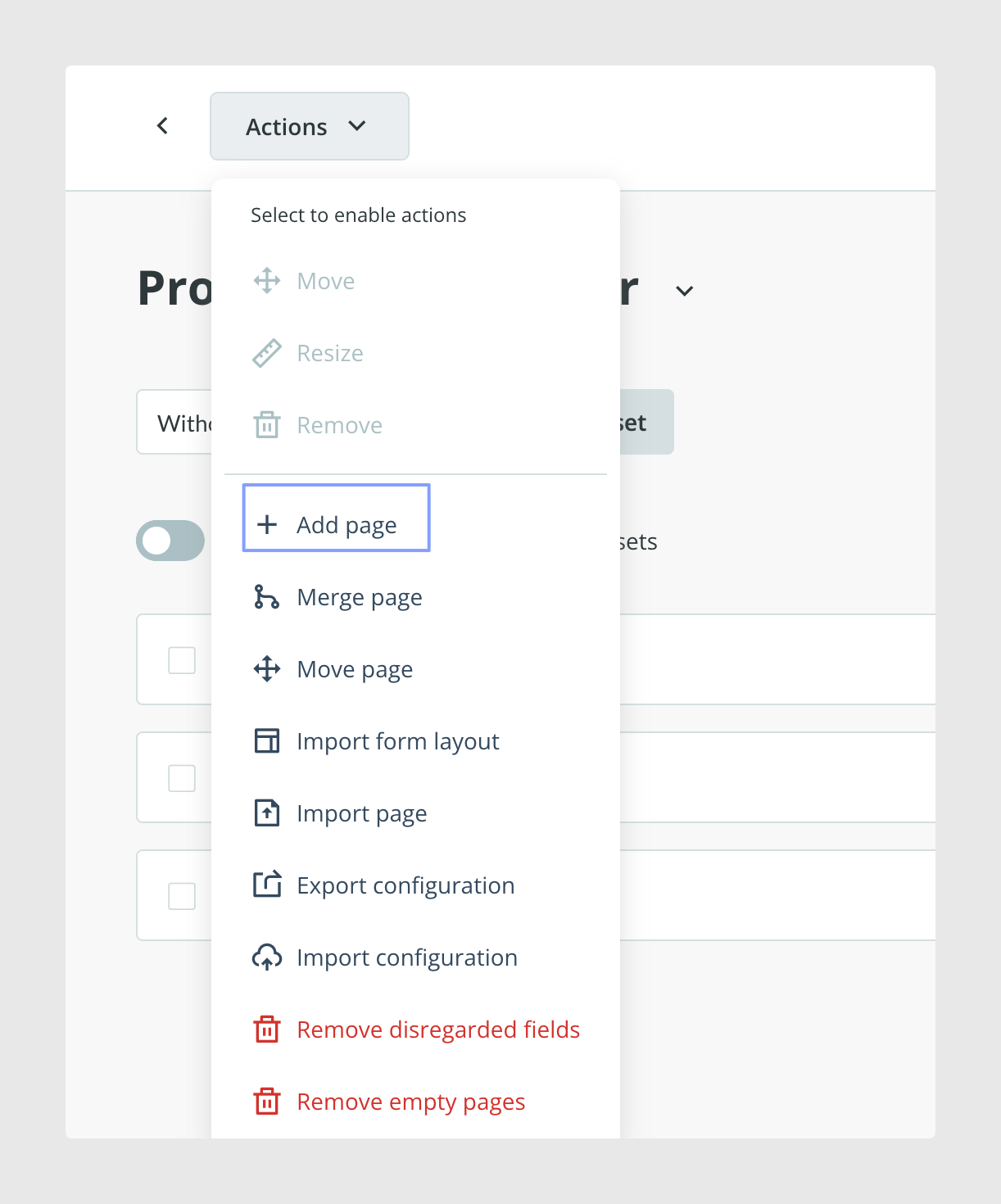
You can also create a tab from the form editor. Open the Actions menu and select Add page.
You can also create sections within a tab to group related fields more clearly.
Tabs separate broader groups of information, while sections organize fields within the same tab.
To create a section or heading:
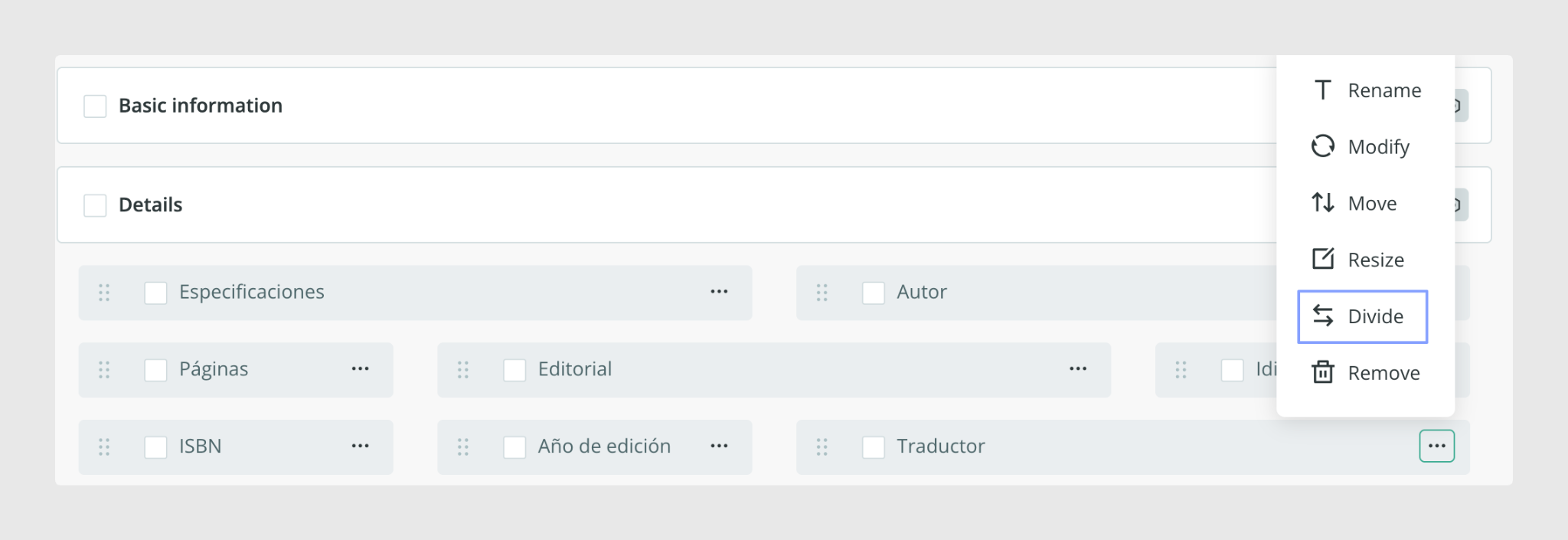
- Click the three dots on the field above which you want to create the heading.
- Select Divide.
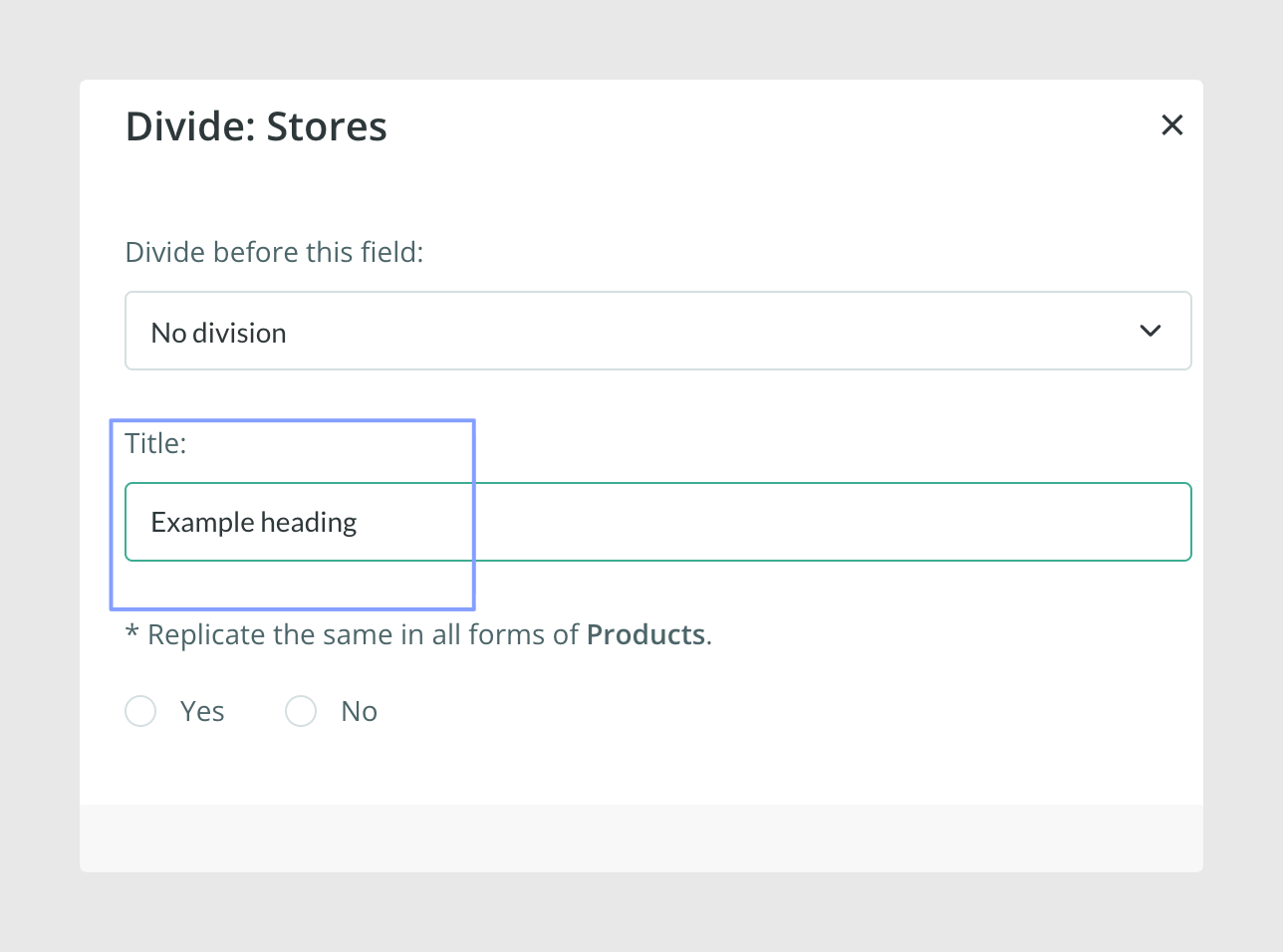
Enter a title and save the changes.
The section or heading will appear in the form editor as shown below:
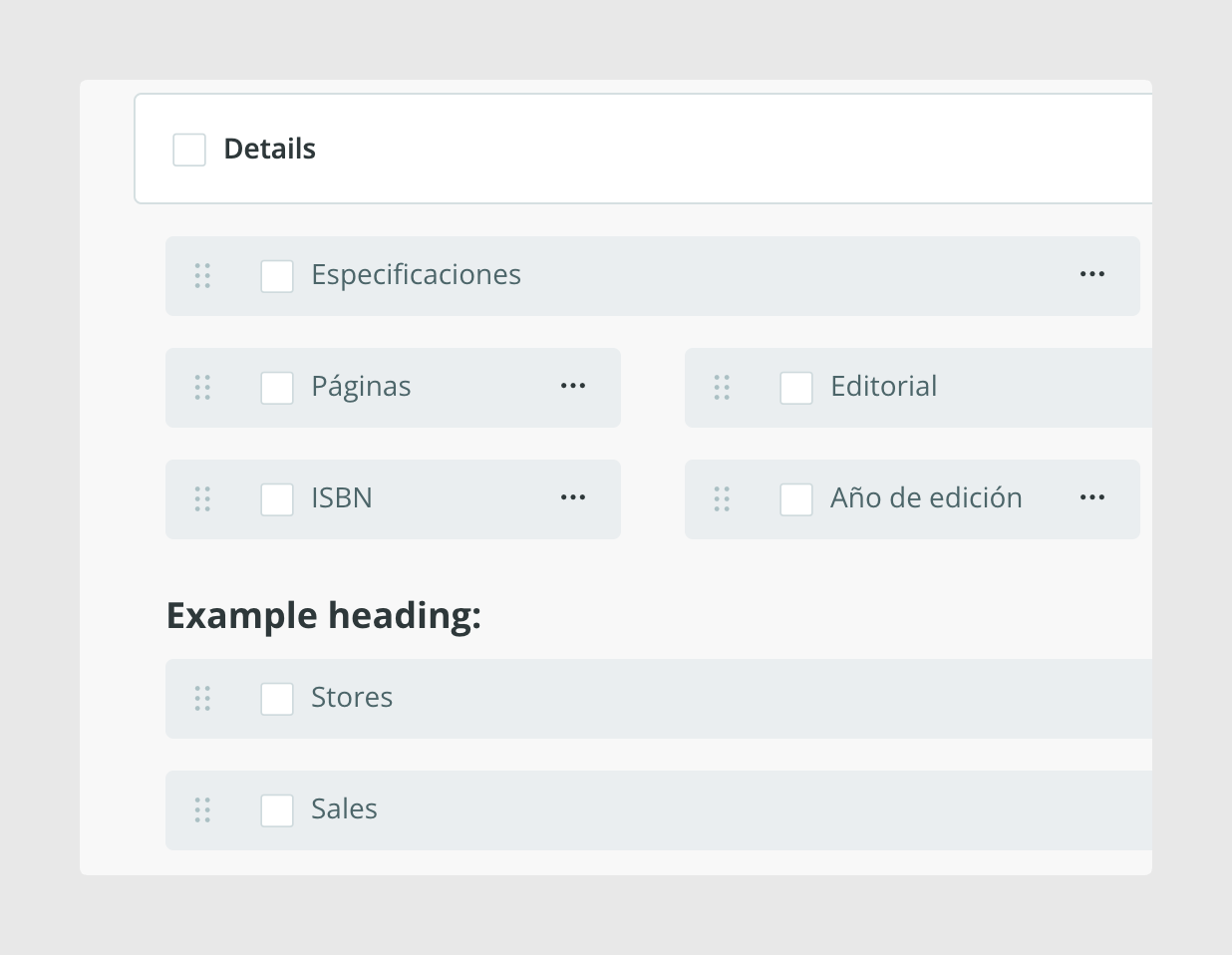
You can also create a section directly from a product form by selecting Redesign form and following the same steps.
Rename a field
To rename a field, open the form editor, locate the field, and click Rename. Update the title and save the change.
This is useful when the current field name is unclear or no longer reflects the information users are expected to enter.
Change a field type
You can change the type of an existing field using the Modify option in the form editor.
This can be useful when a field was originally created with a type that no longer matches the data being managed.
Check the scope option carefully
When you make changes to an Attribute Set, Sales Layer displays a green checkbox that controls the scope of the change.
This option determines whether the change is applied only to the Attribute Set you are editing or replicated across all Attribute Sets:
- If you select Yes, the change will be applied to all Attribute Sets in the account.
- If you select No, the change will only be applied to the Attribute Set you are editing.
Review this option carefully before saving to avoid updating more forms than intended.
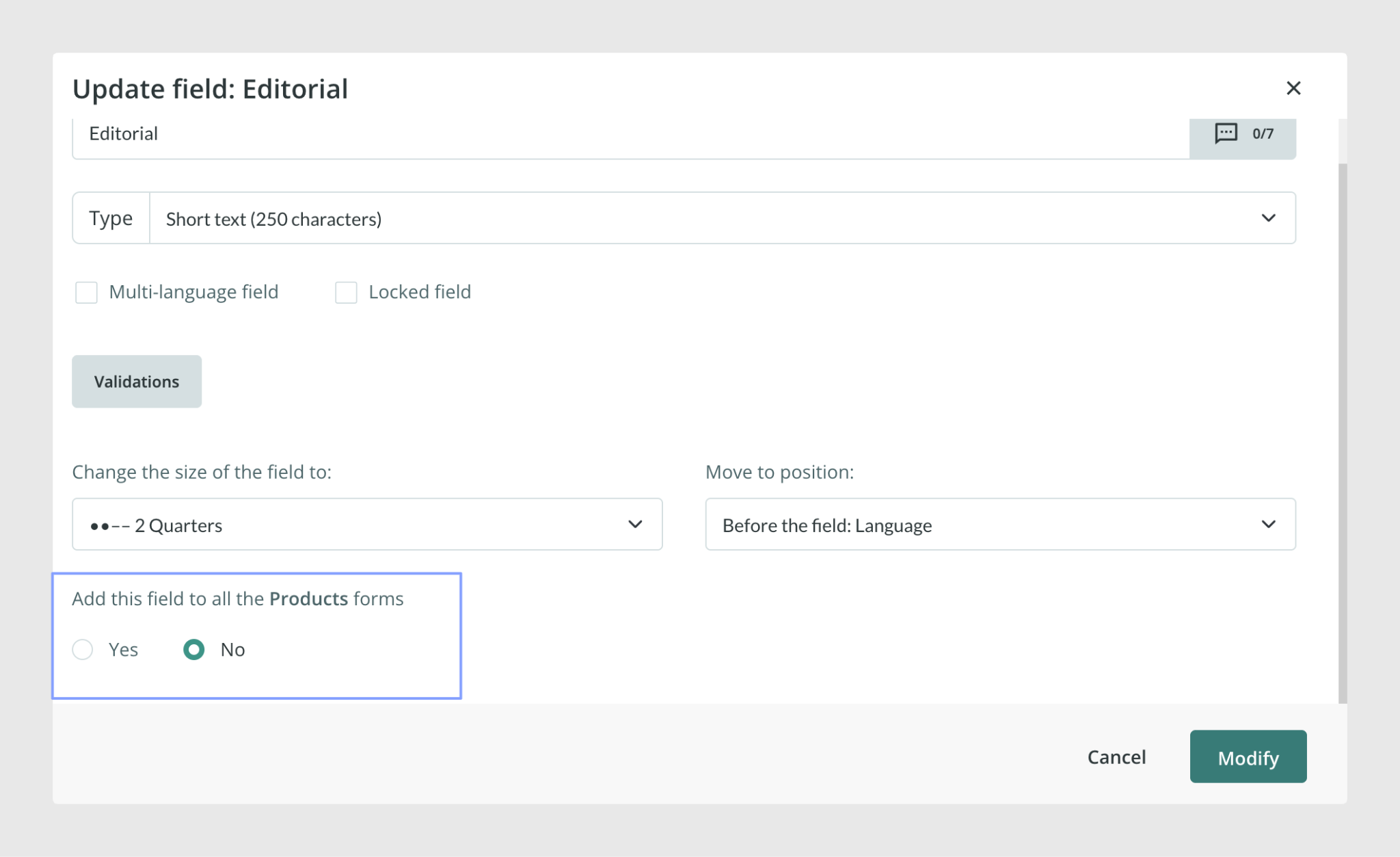
Important: any change made to the general configuration of a field, such as renaming it or changing its type, will apply to every product that contains that field, even if the products belong to different Attribute Sets.
For example, if you rename the field Marketing description to Long description, the new name will appear in every Attribute Set containing that field. This happens even if you select No in the confirmation checkbox to limit the change to the Attribute Set you are currently editing.
Remove a field from an Attribute Set
If a field should no longer be part of an Attribute Set, open the form editor, locate the field, and use its options to remove it from the form.
In most cases, removing a field from an Attribute Set does not delete it from the platform. It only disconnects the field from that specific form.
If the field still exists in another Attribute Set, it will remain available as an unused field and can be recovered later.
Understand when a field is permanently deleted
A field is only permanently deleted when it is removed from every Attribute Set.
If you choose to perform the same action in all product forms, the field will be removed from every structure and cannot be recovered later.
If you remove it from only one form, the field may continue to exist as an unused field, provided that it remains in another Attribute Set.
Remove empty pages and unused fields
If the structure has become disorganized over time, you can clean it up from the Actions menu in the form editor.
This option allows you to remove empty pages and unused fields that you no longer need.
How updates affect variants
Attribute Sets apply to products and their variants, but not to categories.
Variants inherit the Attribute Set of their parent product. For this reason, structural changes made to the form can also affect variants that use the same configuration.
Before applying broader changes, review how the updated structure will work for both products and variants.
Common Use Cases
- Reorganizing fields in an existing Attribute Set.
- Adding a missing field to an existing form.
- Reusing an existing field instead of creating a duplicate.
- Recovering an unused field that already exists in the platform.
- Removing a field from one Attribute Set without deleting it from every structure.
- Cleaning up old tabs or unused fields after several structural changes.
Best practices
Before updating an Attribute Set, decide whether the change should affect only that structure or all Attribute Sets. Reuse existing fields whenever possible, especially when a field is already available as unused. Before removing a field, confirm whether you are removing it from one form or from every product form. Understanding the scope of each action will help you avoid duplicate fields, accidental deletions, and additional cleanup work.
Was this article helpful?
That’s Great!
Thank you for your feedback
Sorry! We couldn't be helpful
Thank you for your feedback
Feedback sent
We appreciate your effort and will try to fix the article