Use a Related items field when you want to link one product to other products in Sales Layer. This is useful for relationships such as accessories, similar products, bundles, or frequently bought together items.
This article explains how to create the field, connect it to the Products table, and link the products you want to show together.
Add the Related items field
Open any product so you are inside its form. Then go to Actions > Redesign form.
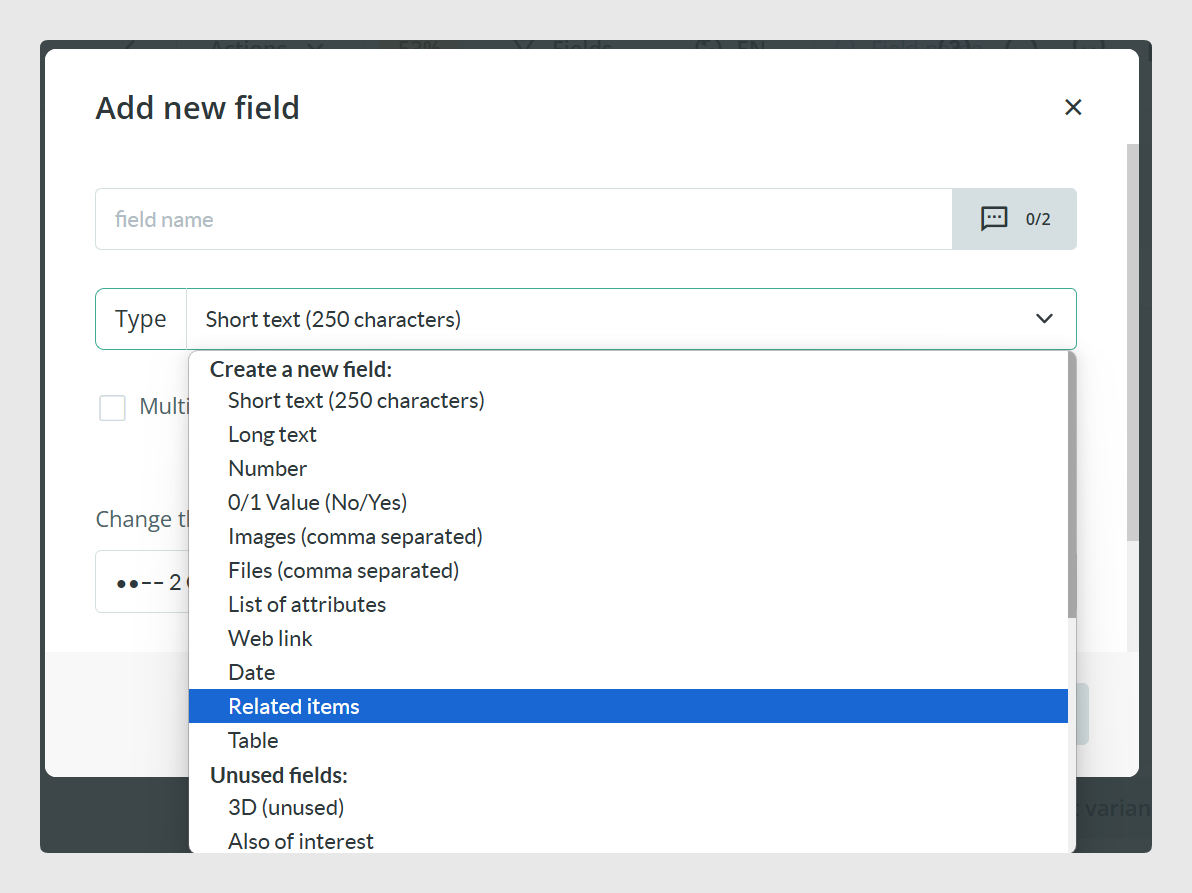
Scroll to the end of the form and click Add new field. In the field type dropdown, choose Related items.
Give the field a clear name that matches the relationship you want to create, such as Related products, Accessories, Similar products, or Frequently bought together.
Configure the field to link products
After creating the field, click Configure.
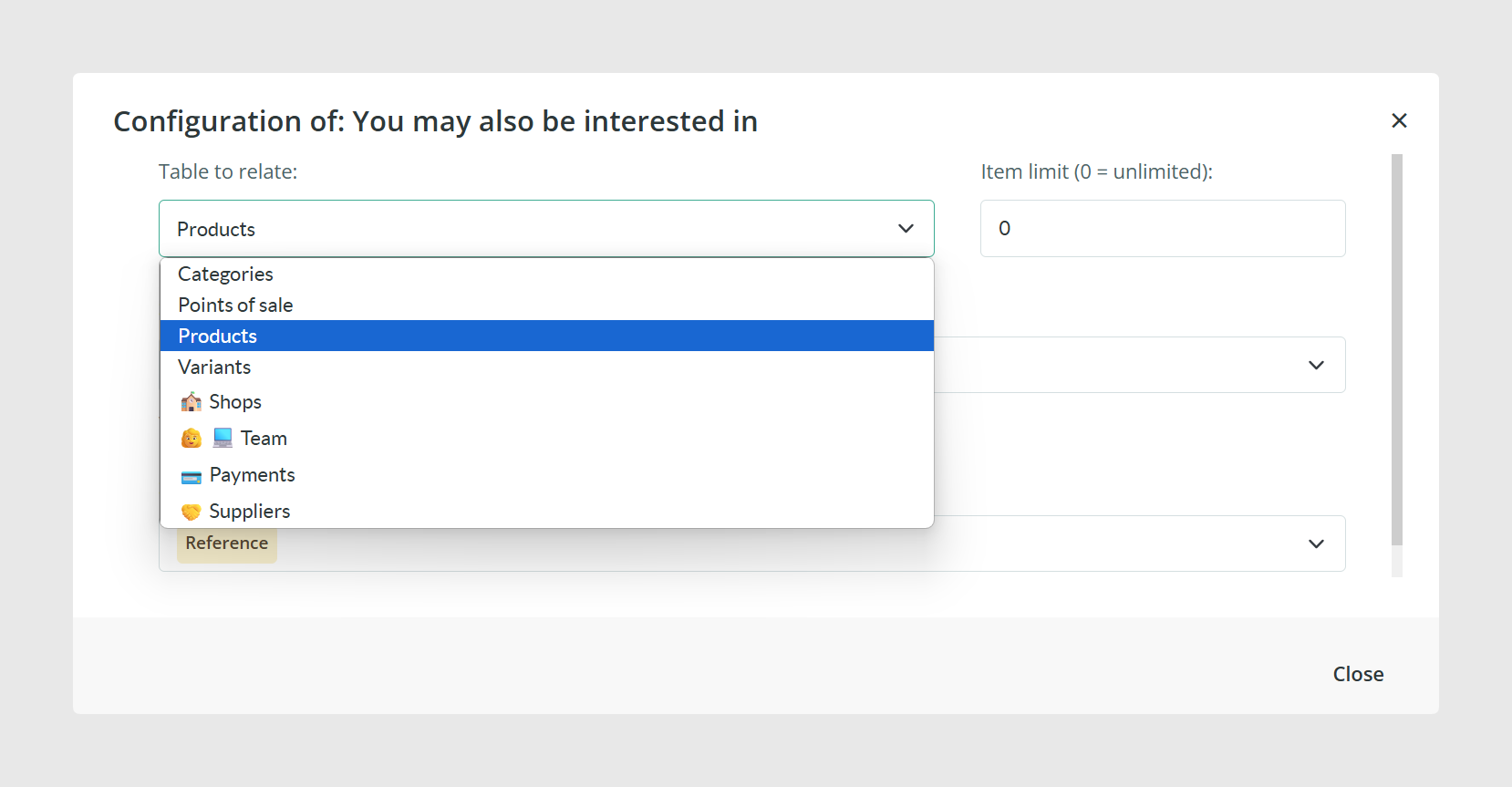
In the table selector, choose Products. This tells Sales Layer that the field will link products to other products.
Choose what users see in the list
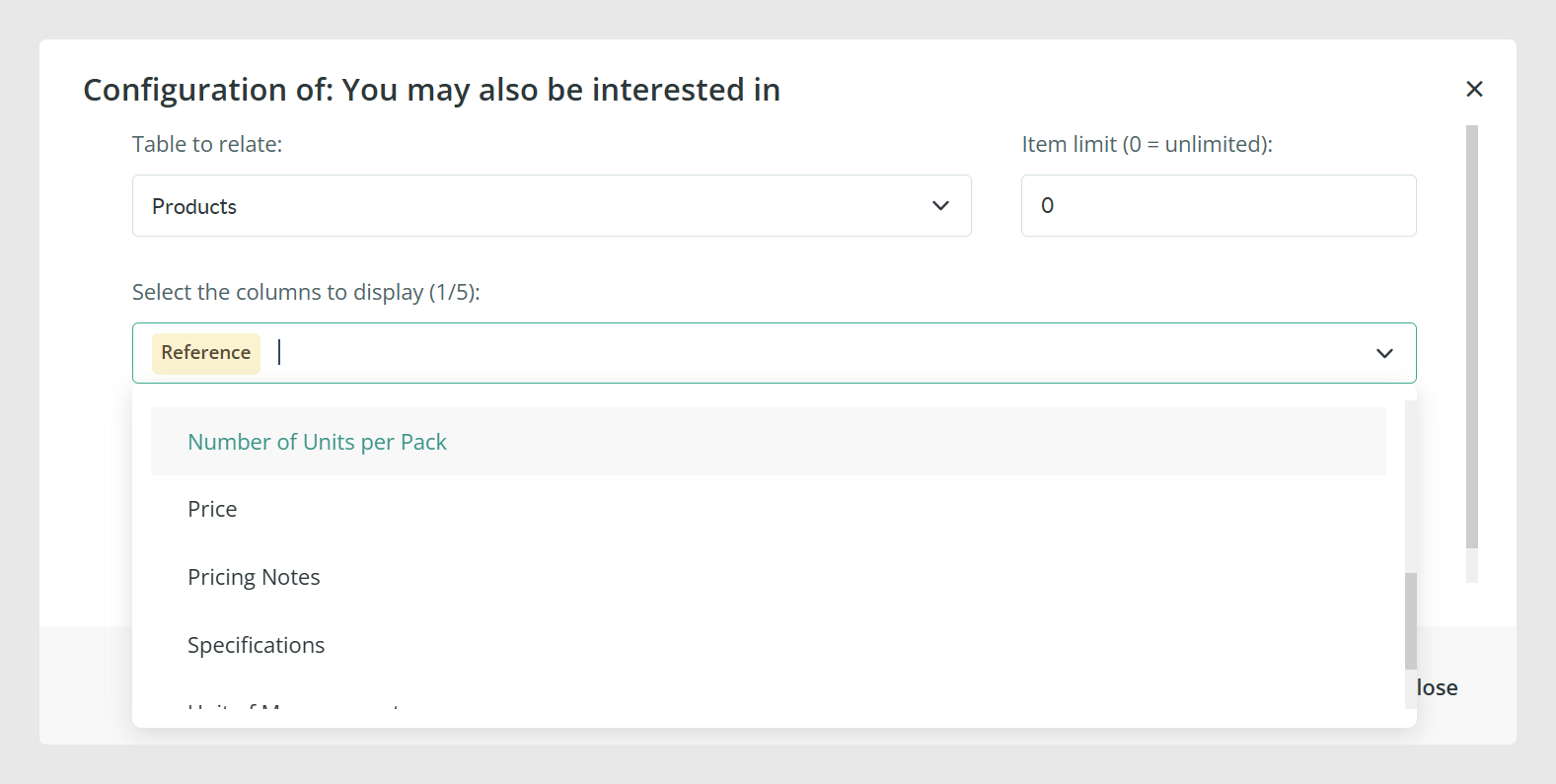
When you link the field to the Products table, you can choose up to 4 fields to display for each linked product in the selection view. This helps users identify the correct product more easily while linking items.
Only Short text and Number fields are available for this view.
A practical setup is to show fields such as Reference, Name, Brand, or another internal code.
Customize the title shown in the selector
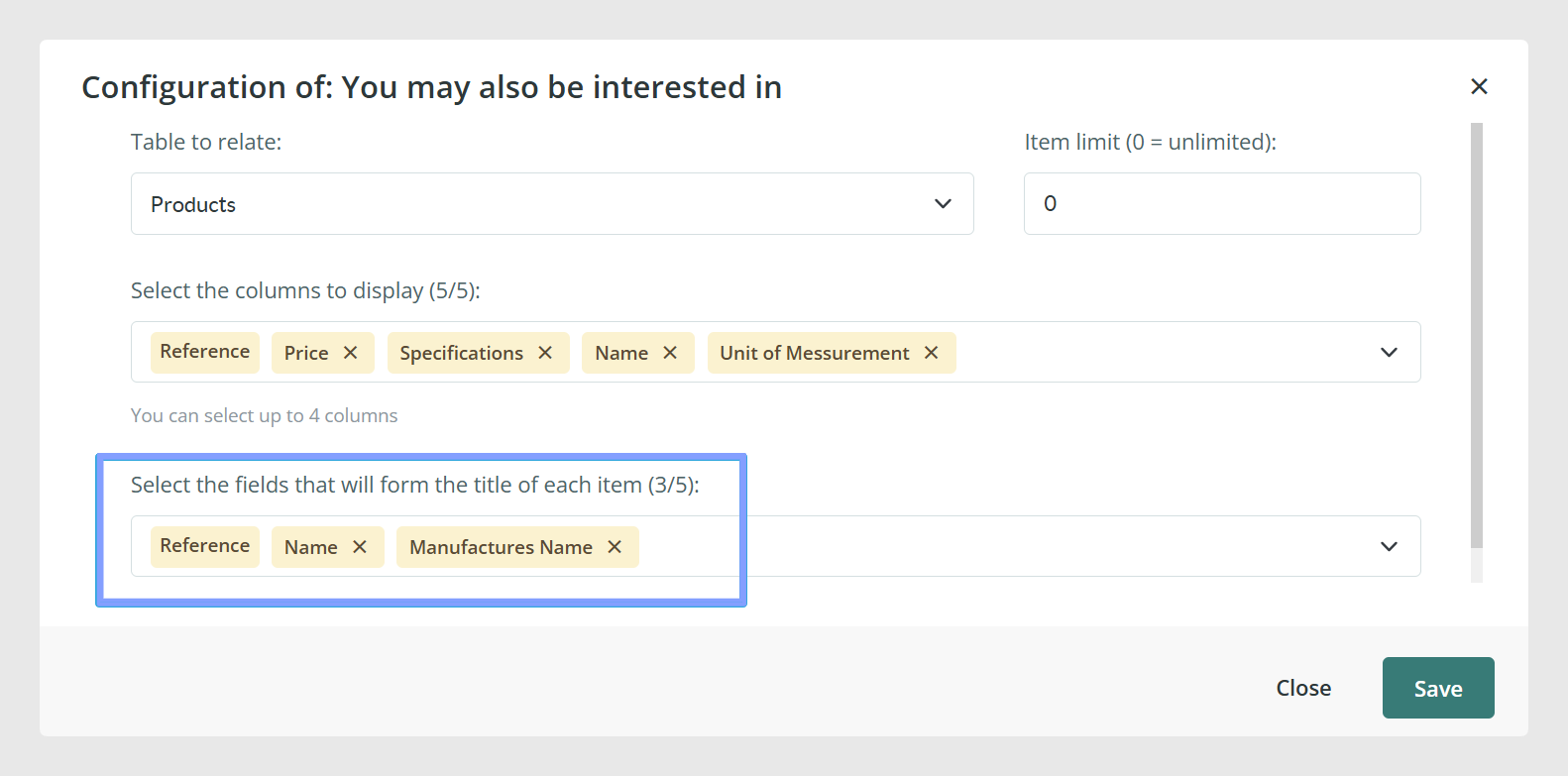
You can also choose up to 5 fields to build the title that appears in the dropdown selector. This is useful when product names alone are not enough to identify the right item.
For example, you might build the selector title with Reference + Name + Brand.
Once you finish the setup, click Save.
Link products one by one from the dropdown
After saving the field, go back to the product form and open the dropdown inside the Related items field.
You can select linked products one by one from that list. If the related table already contains at least one product, Sales Layer also shows a search bar to help you find the right item faster.
This option works well when you only need to link a few products.

Link products with Manage items
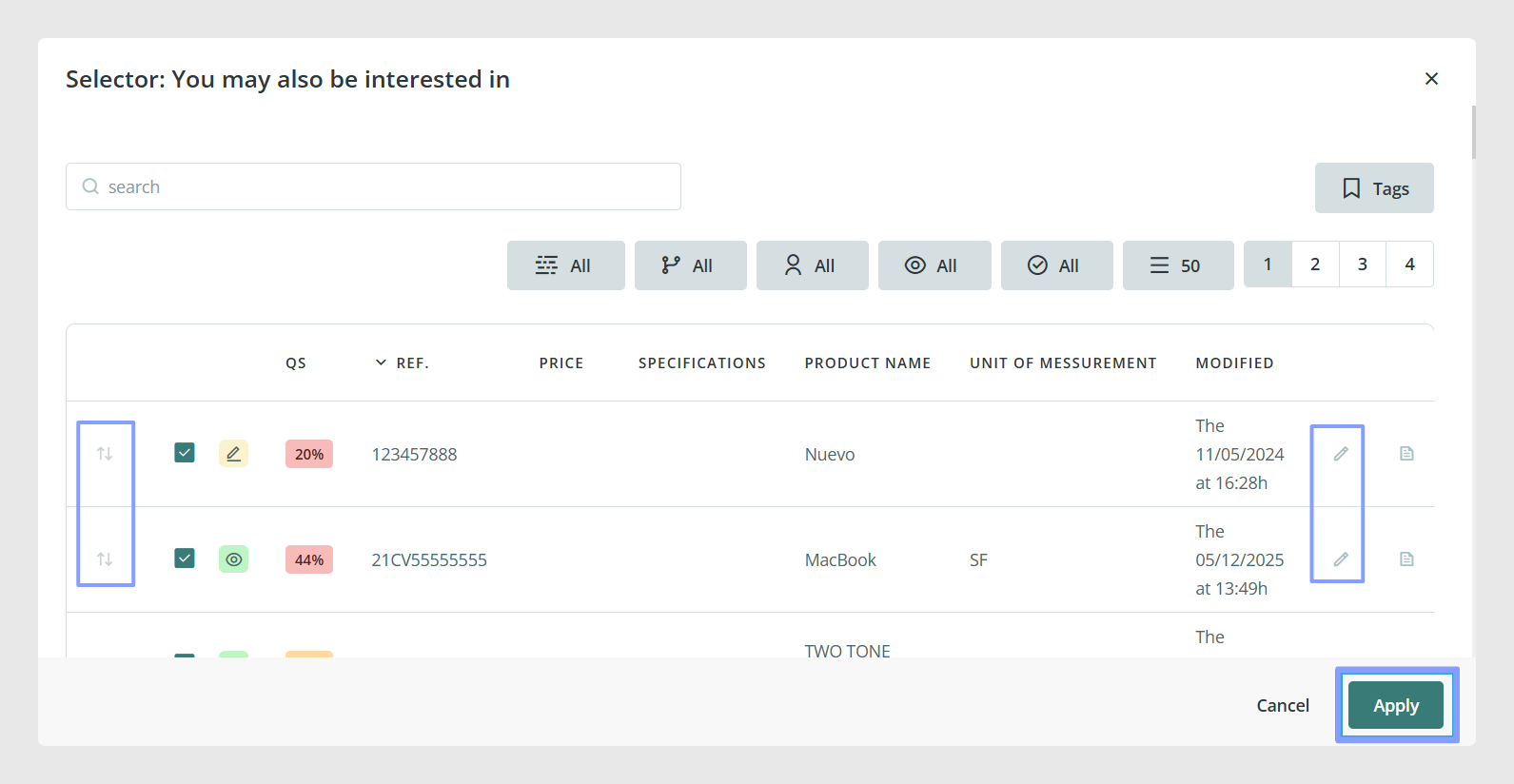
If you need more control, click Manage items.
This opens a larger window where you can search by reference or use filters such as:
Attribute Set
Category
Status
Tags
This method is better when you want to link several products at once or narrow the list before selecting items. After choosing the products, click Apply to save them.

Tip: If a filter returns no results, check whether the filter is set to All where available, then run the search again.
Review and reorder linked products
Once the products are linked, you will see them inside the field.
From there, you can:
click the pencil icon to open the linked product form in another tab
click the preview icon or the product reference to open the full product sheet
use the arrow controls in the Manage items window to reorder the linked products
The order you set is preserved when the data is exported through connectors. If the linked selection spans more than one page, sorting is done page by page.
Combine Related items with Custom Entities
Remember that a Related items field is not limited to linking products with other products. You can also relate items from different tables, including Custom Entities.
This is especially useful when you want to connect shared information to several products without repeating the same content in each one. For example, you can use a Custom Entity to store documents or supporting information such as quality certificates, instruction manuals, shipping conditions, or compatible spare parts lists, and then relate that Custom Entity to the products that need it.
Use Replace From Table in exports
If you want to get even more value from this setup in exports, you can also combine it with the Replace From Table formula so that your channel exports a field from the linked item instead of only exporting its internal reference.
For example, if a product is linked to several accessories through a Related items field, you can use REPLACE_FROM_TABLE() to export the accessory name instead of only exporting the linked product reference.
For the full setup and syntax, see Replace From Table formula.
Common Use Cases
Show similar products on a sales channel.
Link accessories to a main product.
Create product bundles.
Show products that are usually bought together.
Best practices
Use a field name that describes the relationship clearly, such as Accessories or Related products. Set a selector title that helps users identify products quickly, especially if your catalog contains similar names. Keep the list focused, because too many linked products make the field harder to maintain. If product order matters in your channel, set that order in Manage items and review it regularly so exports stay consistent.
Was this article helpful?
That’s Great!
Thank you for your feedback
Sorry! We couldn't be helpful
Thank you for your feedback
Feedback sent
We appreciate your effort and will try to fix the article