AI Agents
The AI Agents functionality expands your team with agents capable of working autonomously within Sales Layer: they translate and enhance texts, apply intelligent rules, and execute complex processes in an agile way.
Access
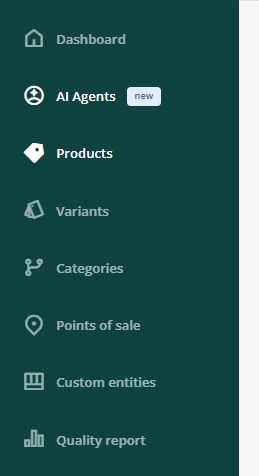
You can access it from the sidebar on the left, as shown in the image below. This will take you to the following link. Although you are entering a different environment, the configured agents will act on the PIM data, since both environments are internally linked in the backend.
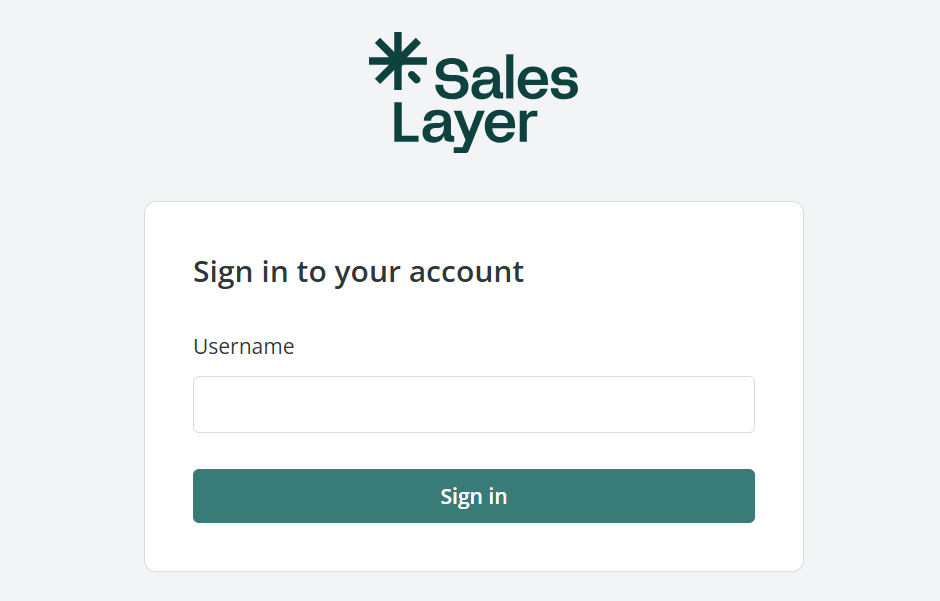
To access it, enter your email address and the password provided by the Sales Layer team. This password is independent from the one you currently use in your Sales Layer account. Since access is granted per user, please contact the Support team if you want additional team members to use this functionality.
If this is your first time accessing the platform, you will need to reset your password.
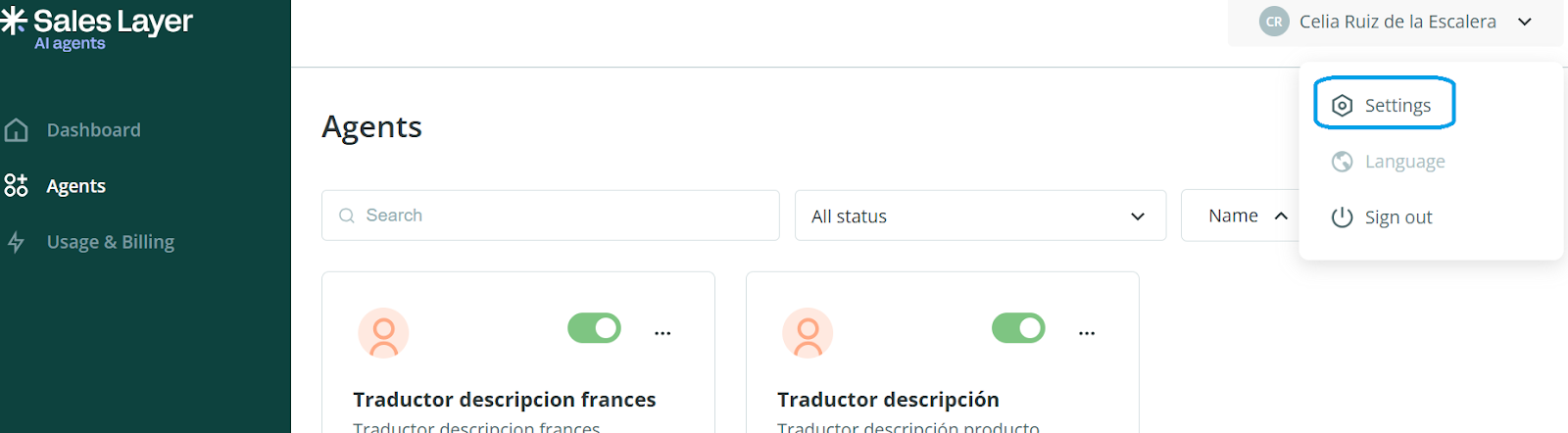
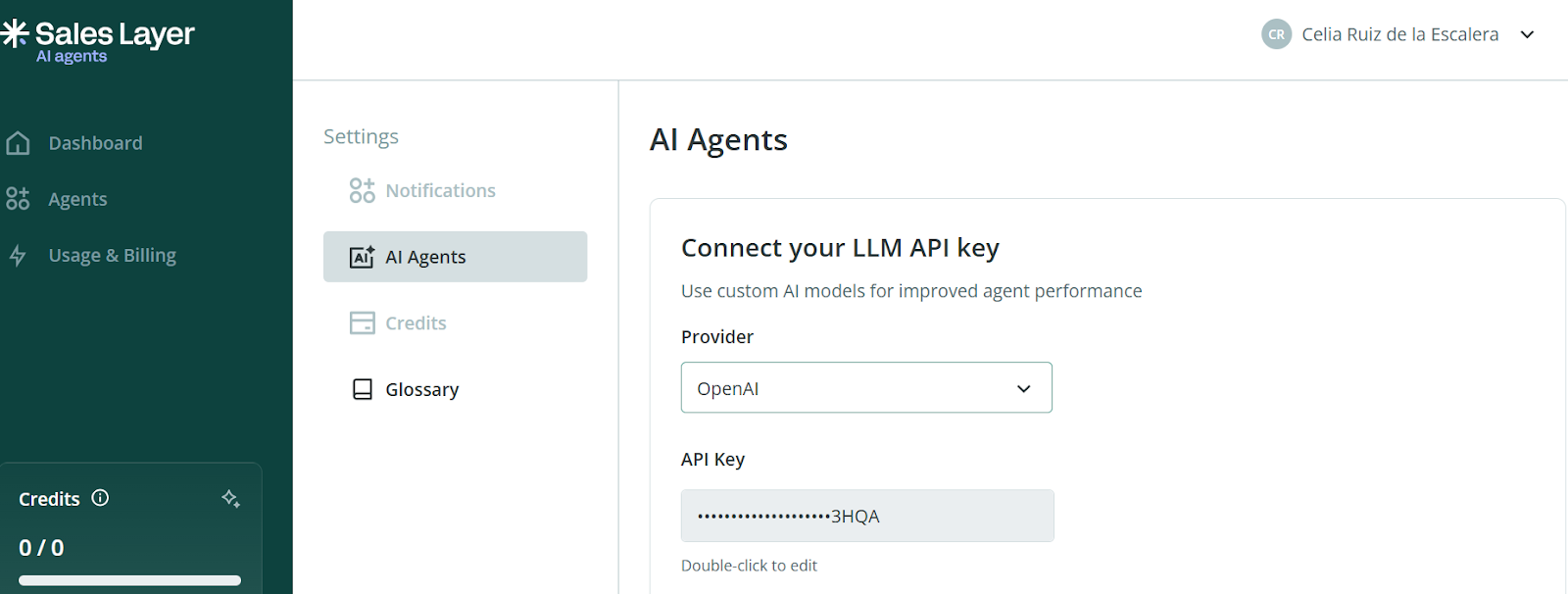
Once inside, if you’re going to try it with your own OpenAI account, open the dropdown menu on the right and select Settings.
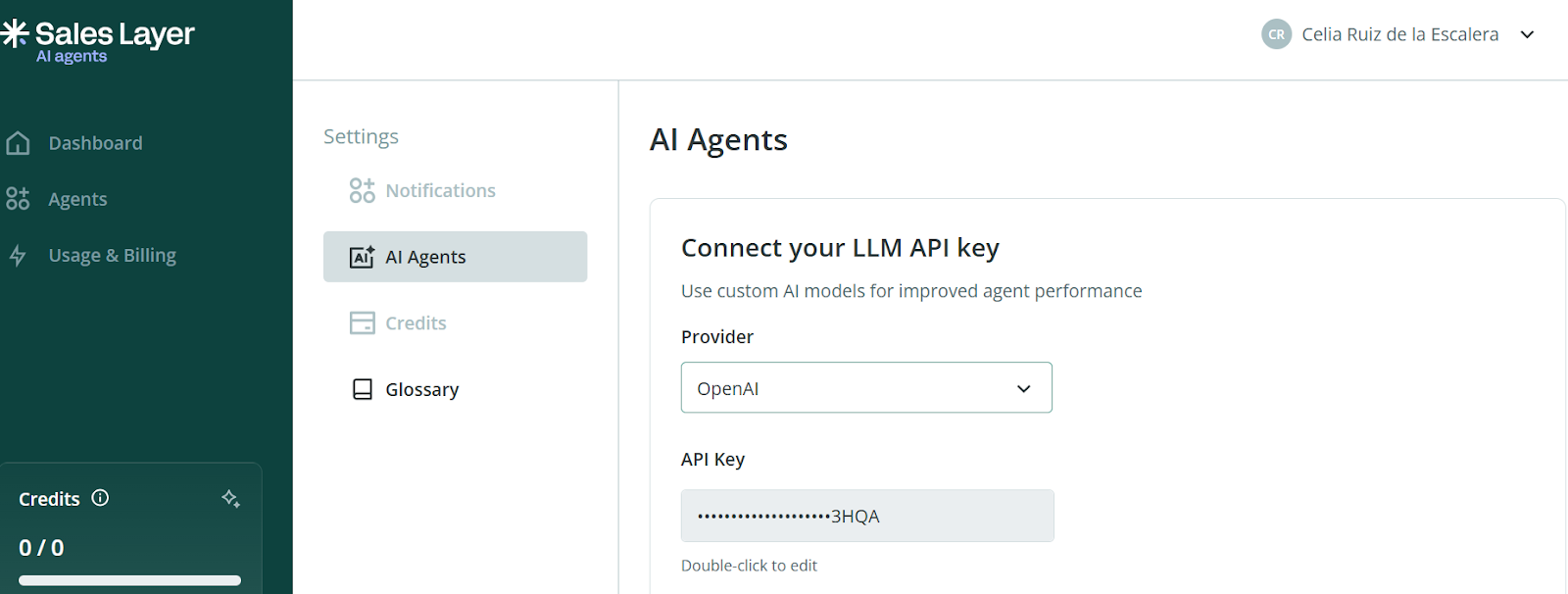
Next, enter the API Key.
Agent Configuration
1. Creation
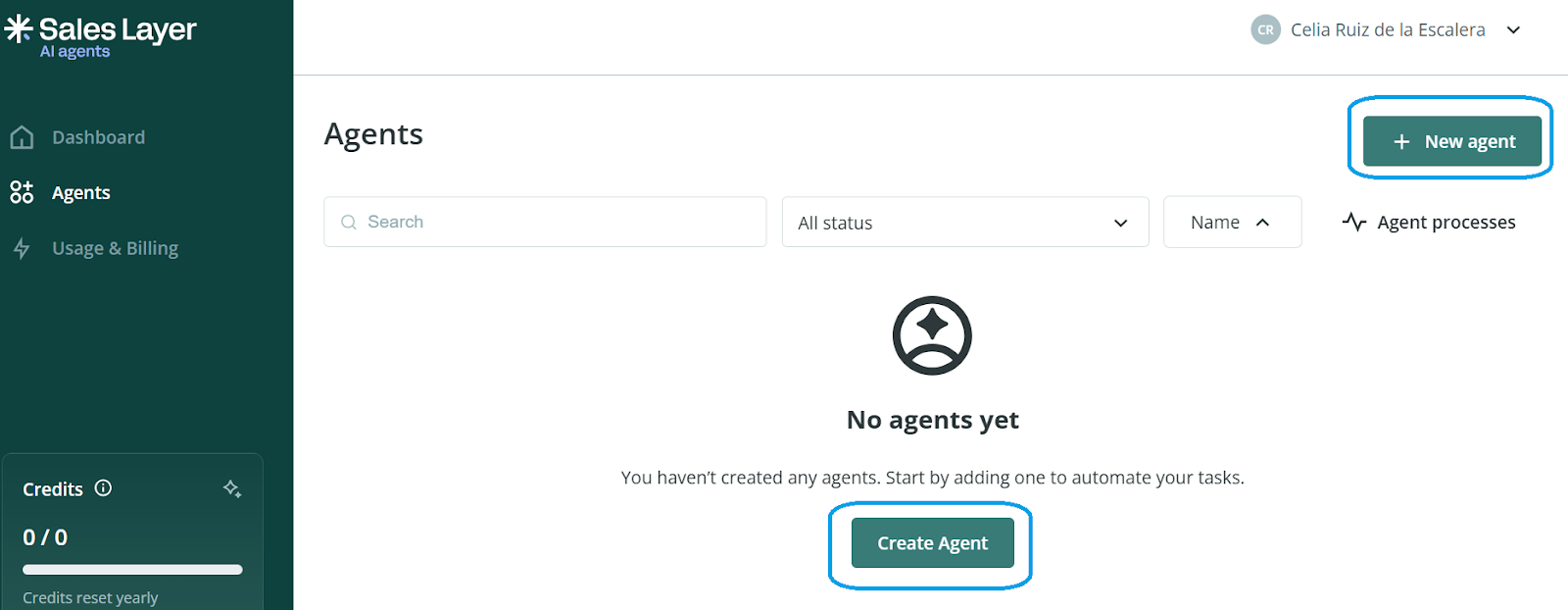
To configure your first agent, go to the Agents section in the left-hand menu and click on New Agent or Create Agent.
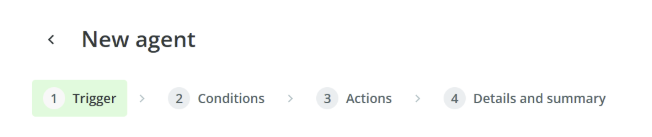
All agents are created in four steps, which we explain below. In tab 3, Actions, you choose the type of action or agent.
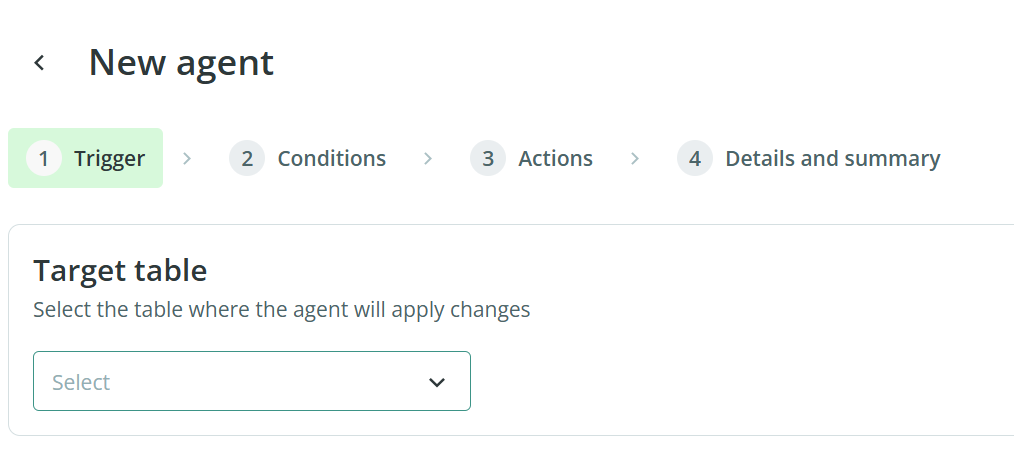
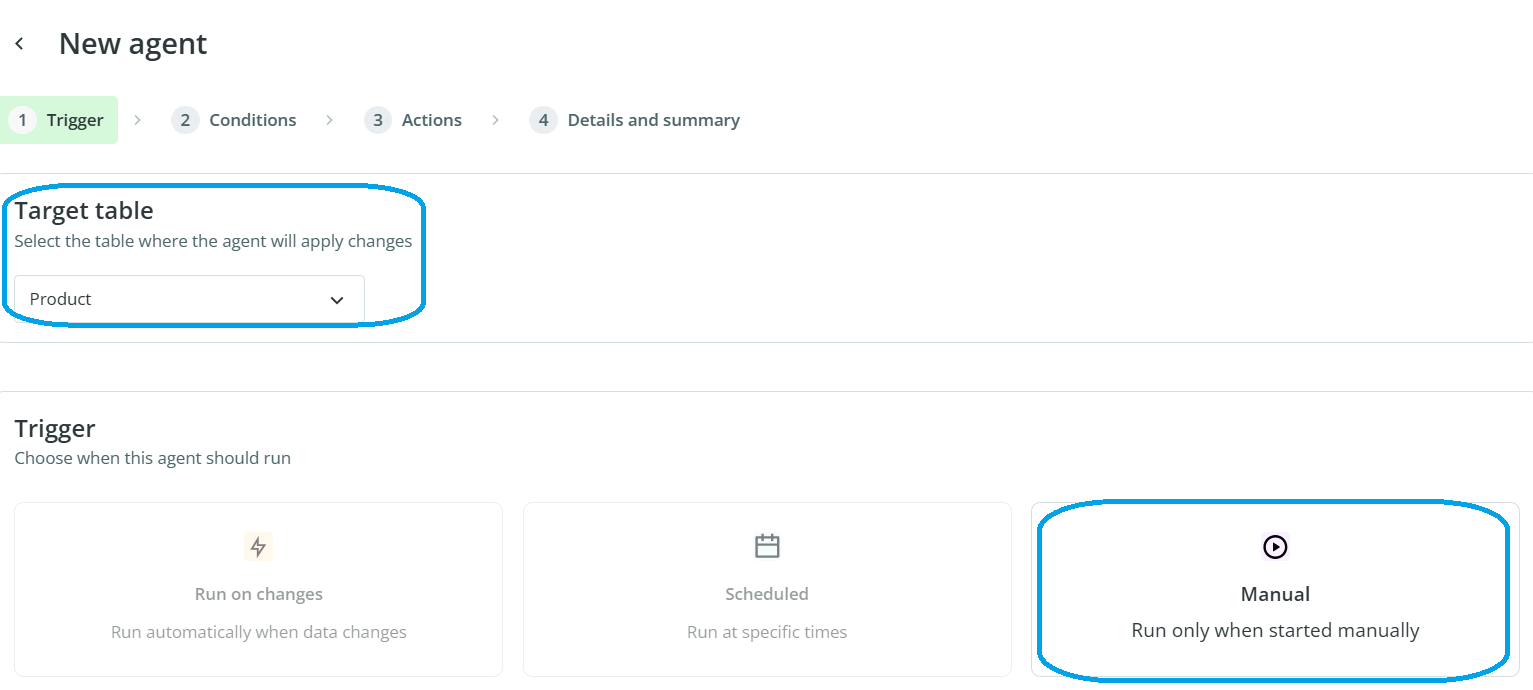
In the first step, under the Trigger tab, select the table on which the agent will operate: Products, Categories, Variants, or Custom Entities.
Next, select the mode that determines when the agent will intervene. For now, only the Manual option is available, but in the future it will be possible to schedule execution on specific days or based on events such as item creation or updates.
In step two, under the Conditions tab, select which items the agent should act on. You can make this selection based on the current state of items in the PIM. You also have the option to include additional filters by clicking the Add filter button.
At the moment, only one status can be selected at a time. If you need the agent to act on multiple statuses, you must configure an additional agent and repeat the process.
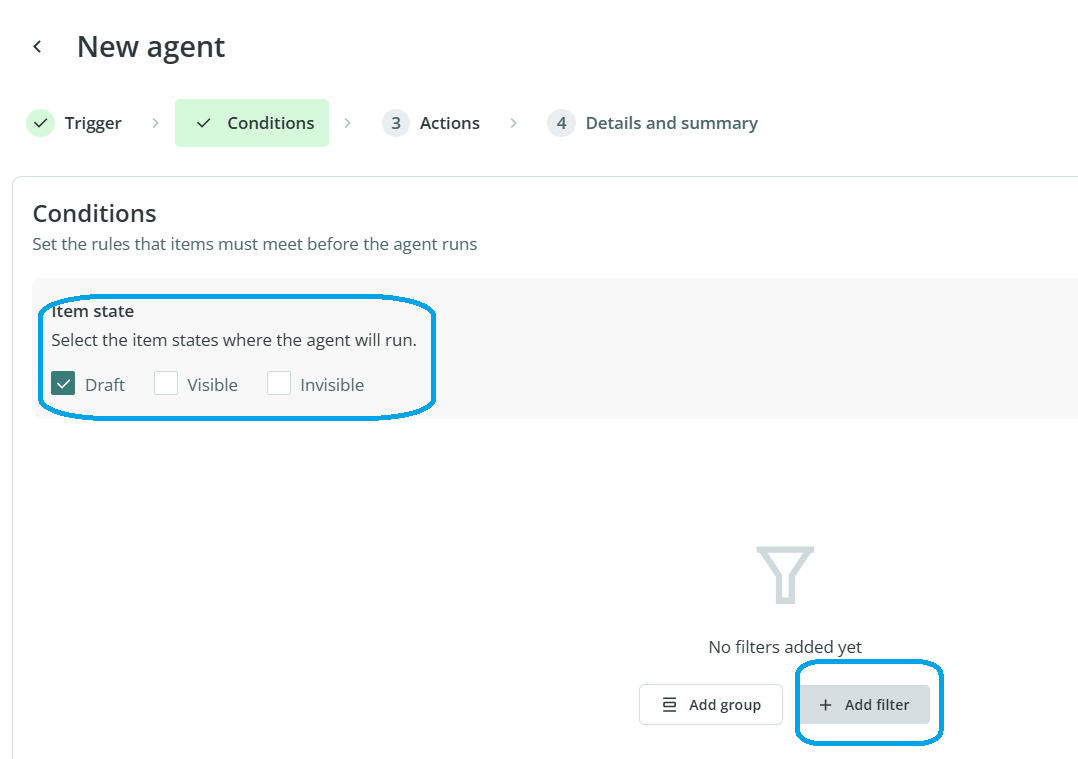
You can filter based on the fields of the form for that table using the available search tool.
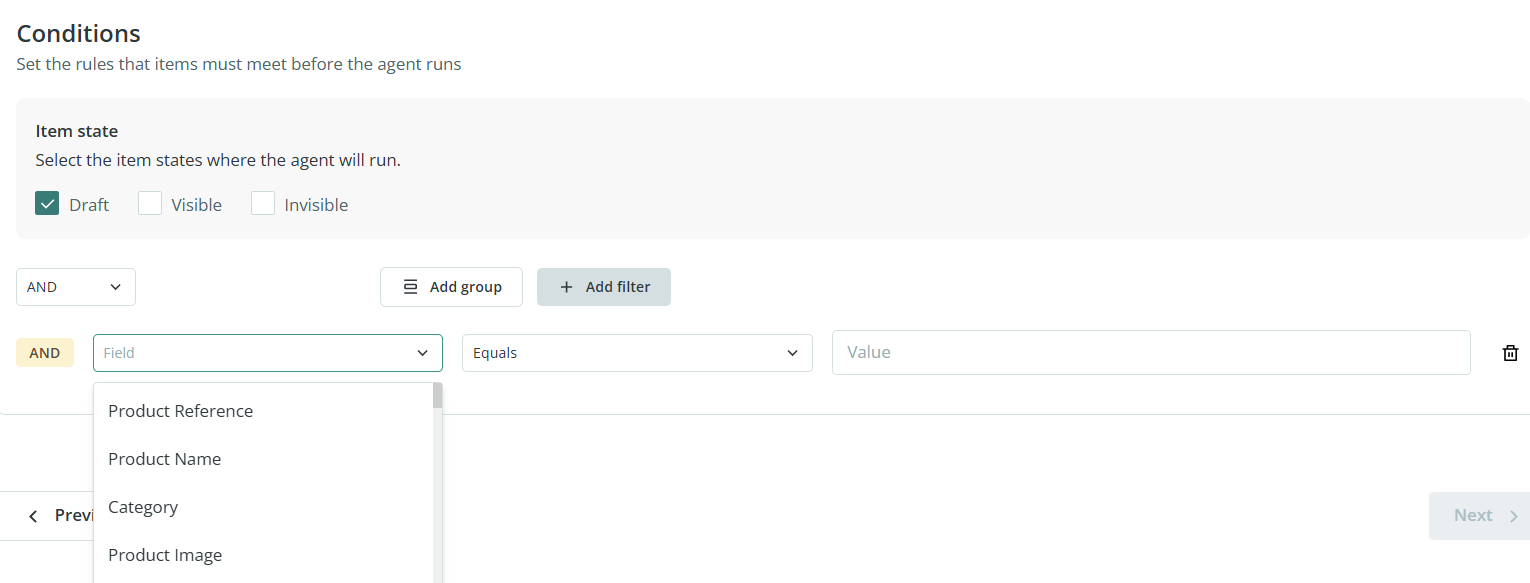
In this example, we have filtered items that contain the tag “demo”.

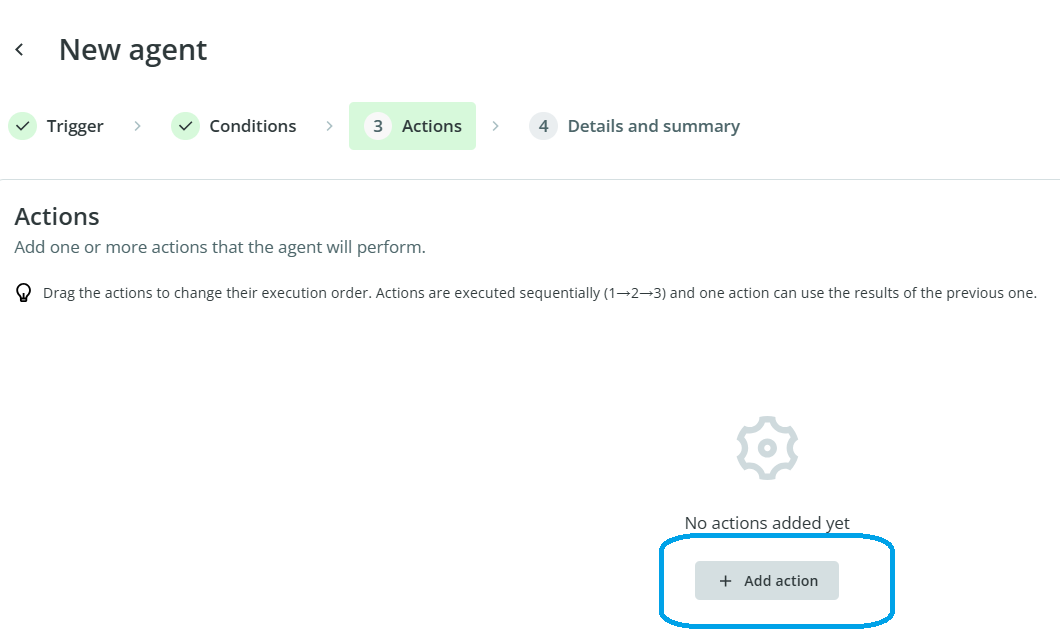
Next, under the Actions tab, select the action you want the agent to perform by clicking Add action.
Among the available actions or agent types are:
- Translation agent
- Text enhancement agent
- Content creation agent
- Smart business rules agent
For now, only the first three are available, and the Smart Business Rules one will be added soon.
Translation Agent
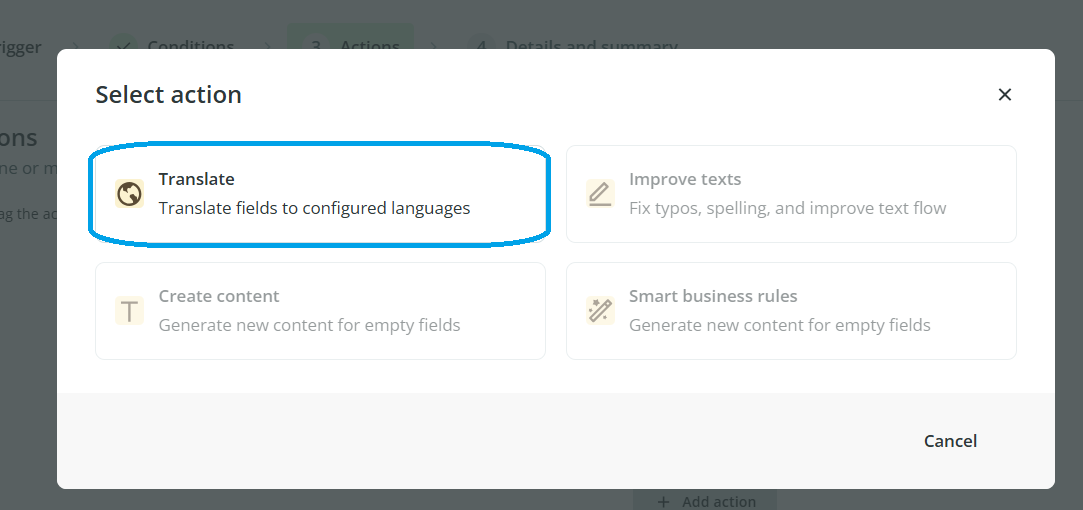
Once the translation action is selected, choose the languages into which you want to translate. The languages available in the dropdown correspond to those activated in your Sales Layer account.
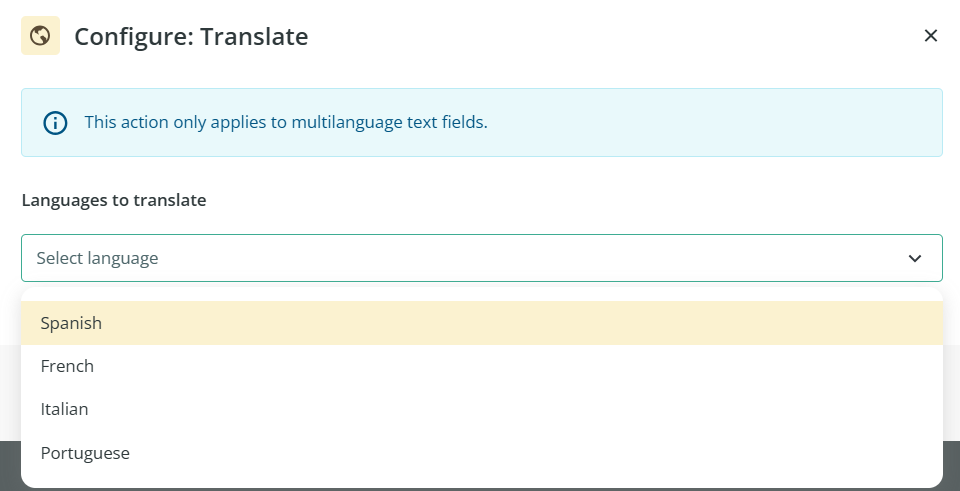
After selecting the languages, choose the first option if you want to translate all fields that are multilingual.

Or choose the second option if you only want to translate specific fields.
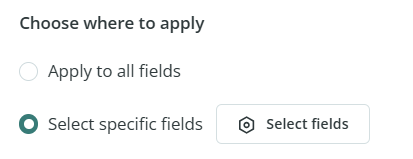
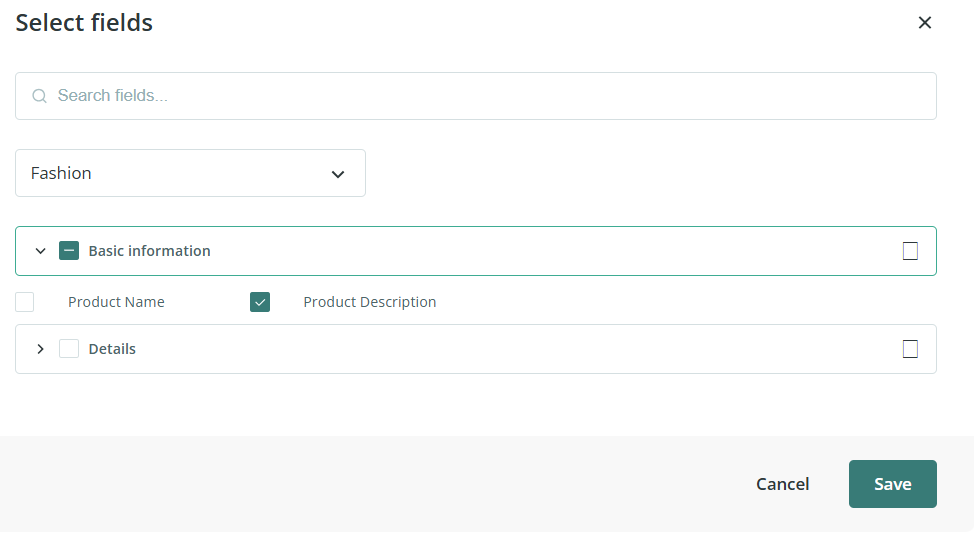
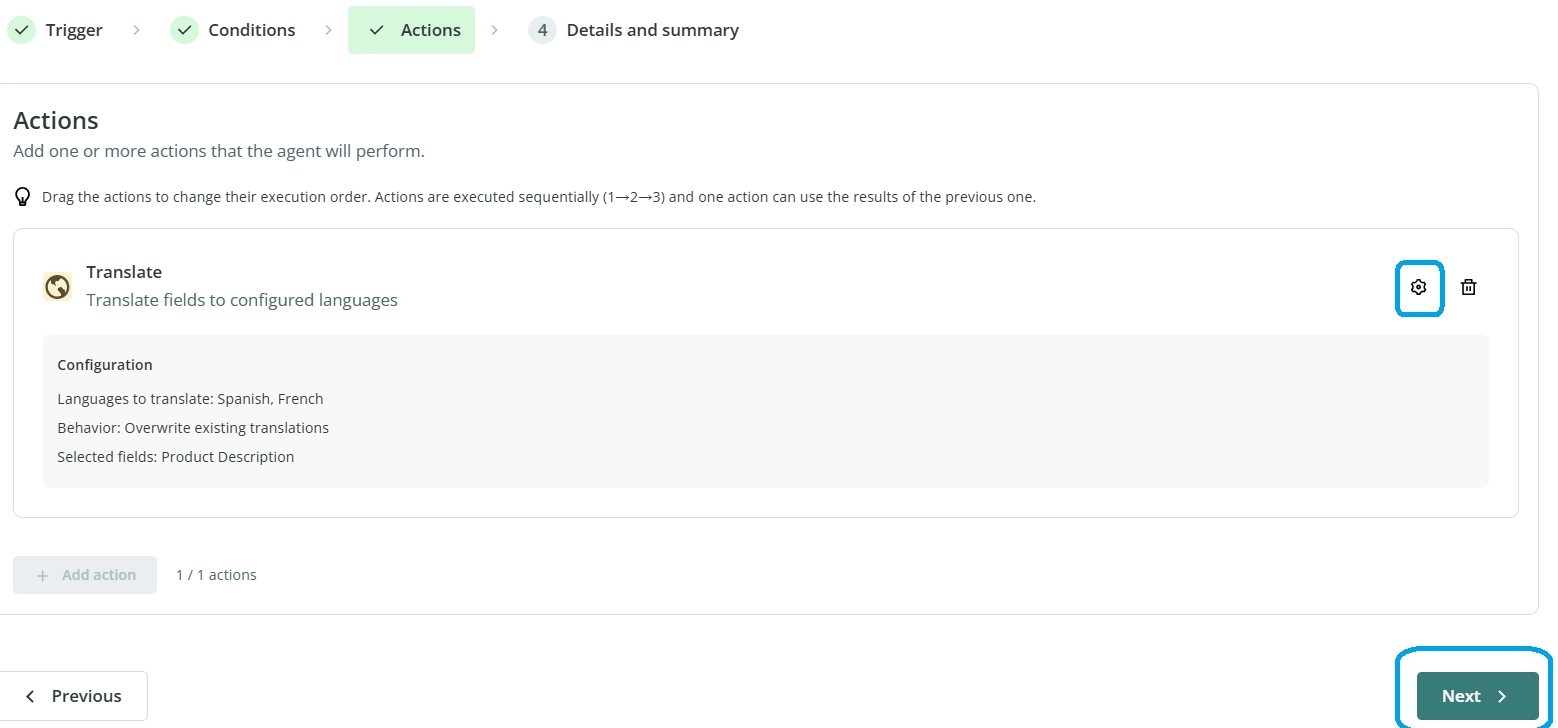
In this example, we selected the Fashion attribute set and only the product description field.
Next, select whether you want the agent to translate only empty fields or overwrite existing translations.

Finally, you can include a prompt with instructions in the last section to tailor the translation to your needs.
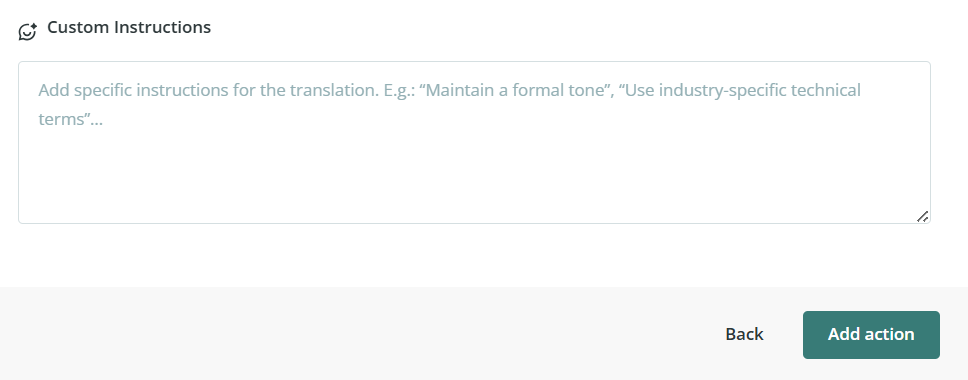
Click the Add action button. If you want to make changes, you can open the settings icon to return to the previous screen. Once everything is ready, click Next.
Text Improvement Agent
If you want to create an agent to improve text, select the following option in the Actions tab.
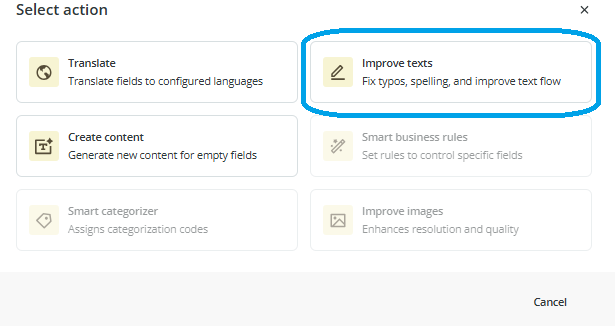
Next, choose whether you want the agent to act on all text fields or on specific fields (in the default language).
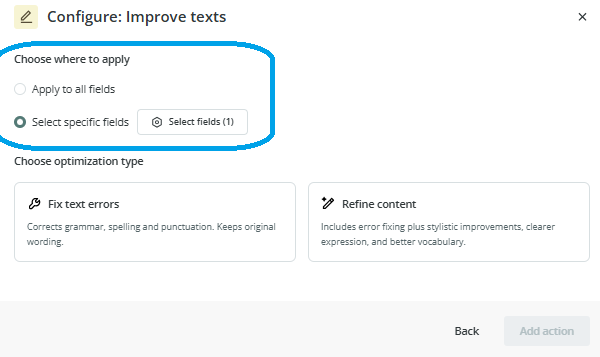
Once the fields are selected, you can choose between two options to improve the text:
- Fix text errors: corrects grammatical and spelling mistakes while keeping the original content.
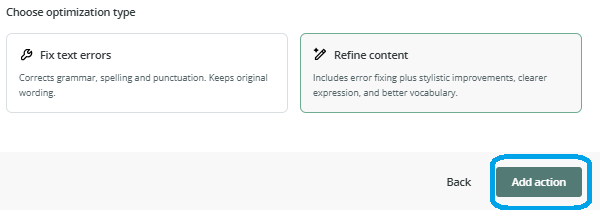
- Refine content: refines and improves the wording of the text in addition to correcting possible errors.
Select one of the two and click “Add action” to continue to the final step.
Content Creation Agent
To create the content creation agent, in the Actions tab select the following option:
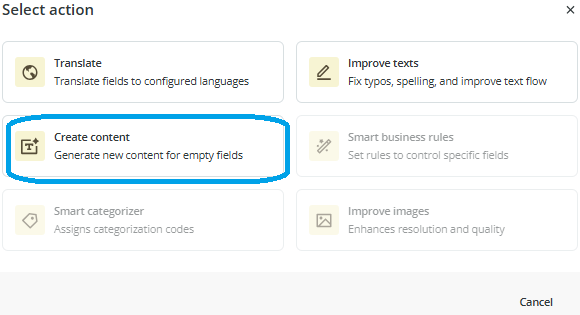
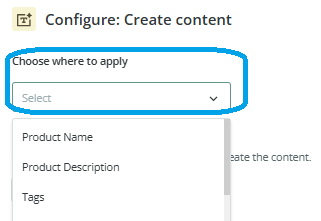
Next, choose from the dropdown which field you want to generate the content in.
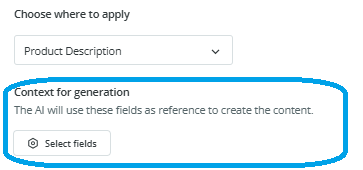
Then select which fields you want to use as a reference to generate the content.
You can choose to generate content only in empty fields by selecting the first option or overwrite existing values with the second option.
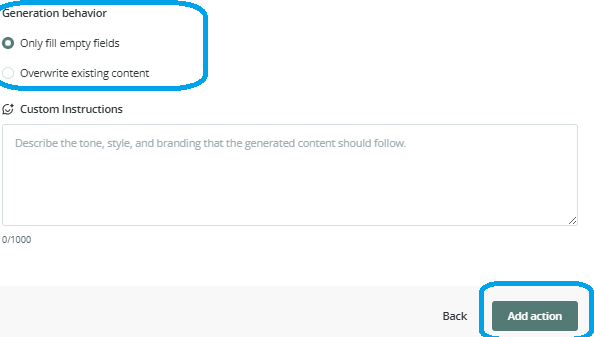
You can also include a prompt with specific instructions so it maintains a particular tone or style.
Once ready, click “Add action” to continue to the final step.
In the final tab, Details and summary, choose a name for the agent you are creating and add a brief description so you can easily identify it in your dashboard.
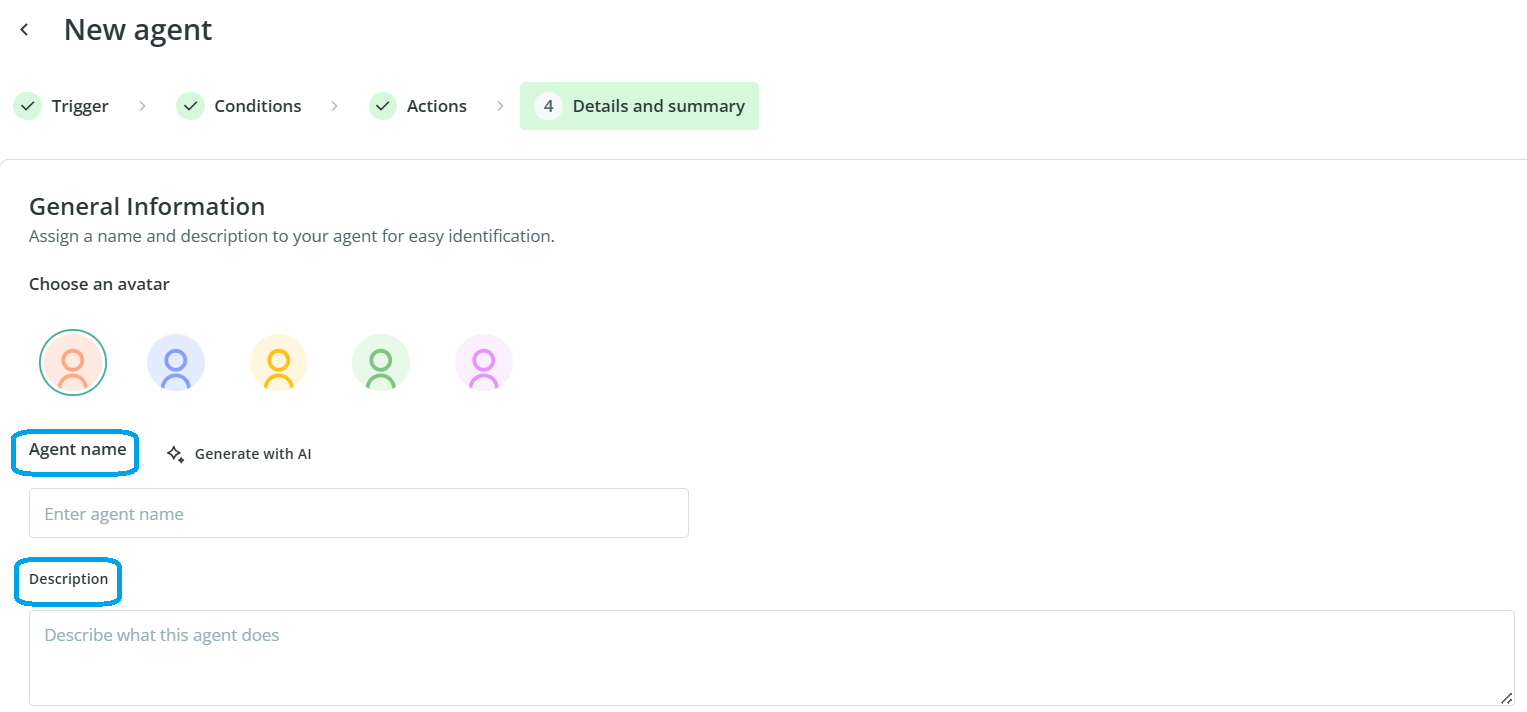
We recommend enabling the following option if you want to review the changes made by the agent before applying them to production.

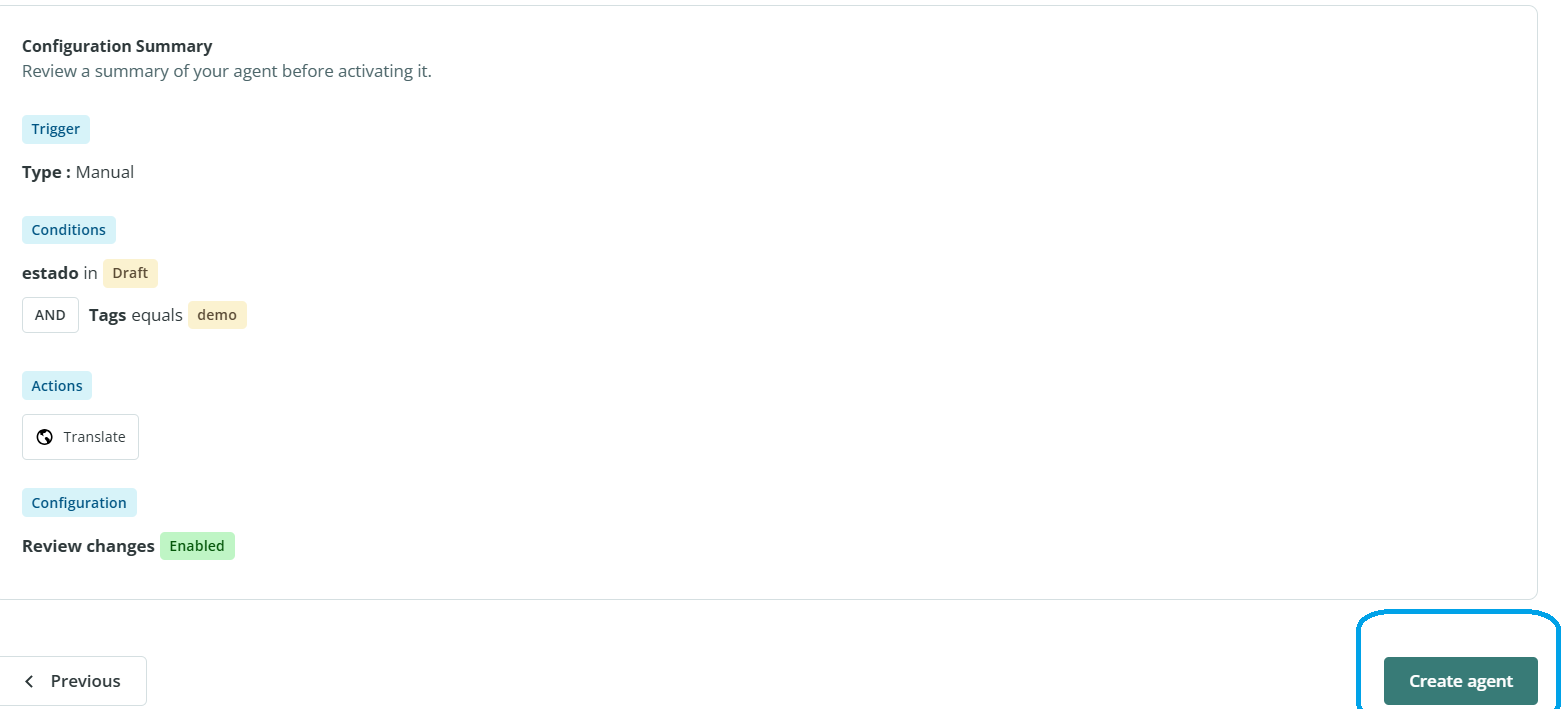
Finally, review the configuration and, if everything is correct, click Create Agent to save the changes.
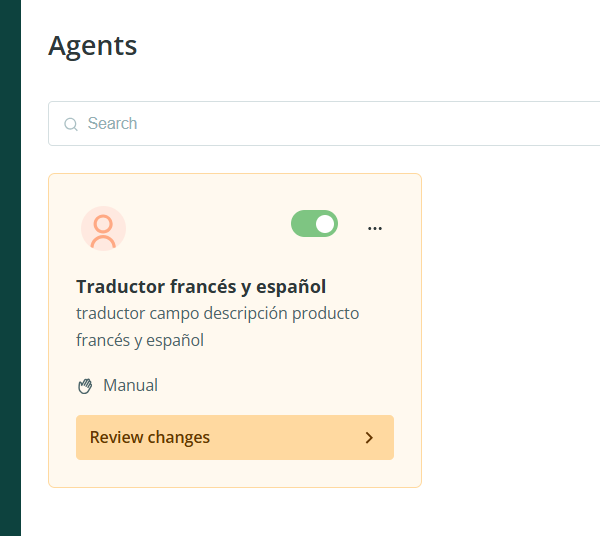
The agent will appear in the control panel, where you can activate or deactivate it.
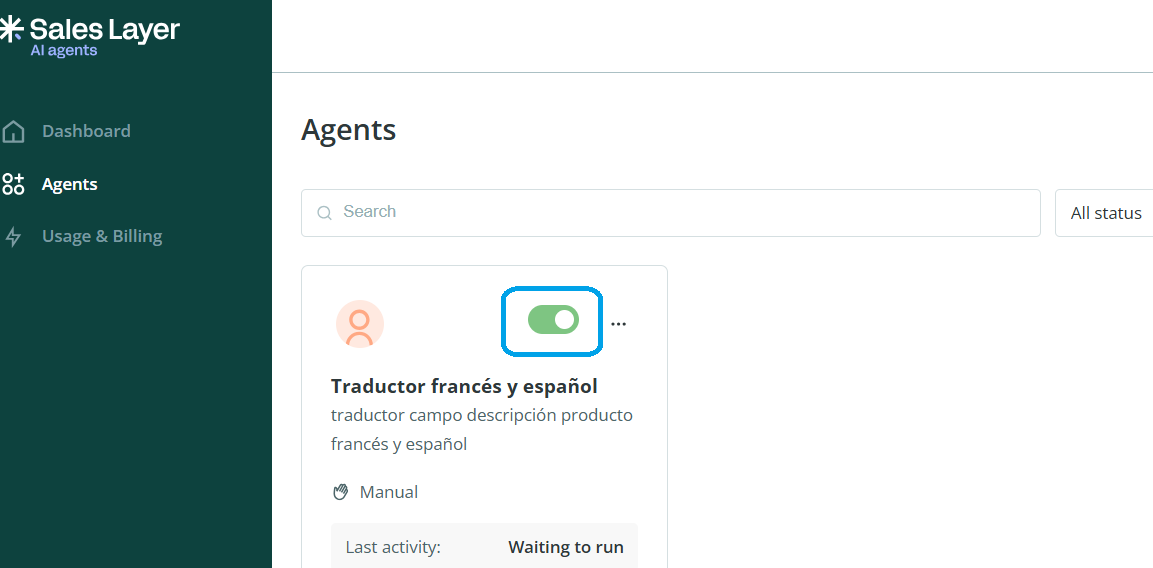
Currently, since only the manual option is available, activating the agent has no effect until it is manually executed.
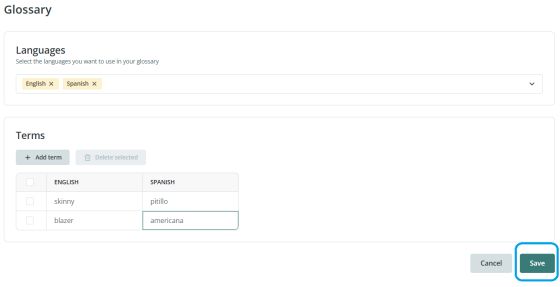
If you want to include a glossary of terms to define how certain words should be translated before running the agent, you can do so from the dropdown menu on the right > Settings > Glossary.
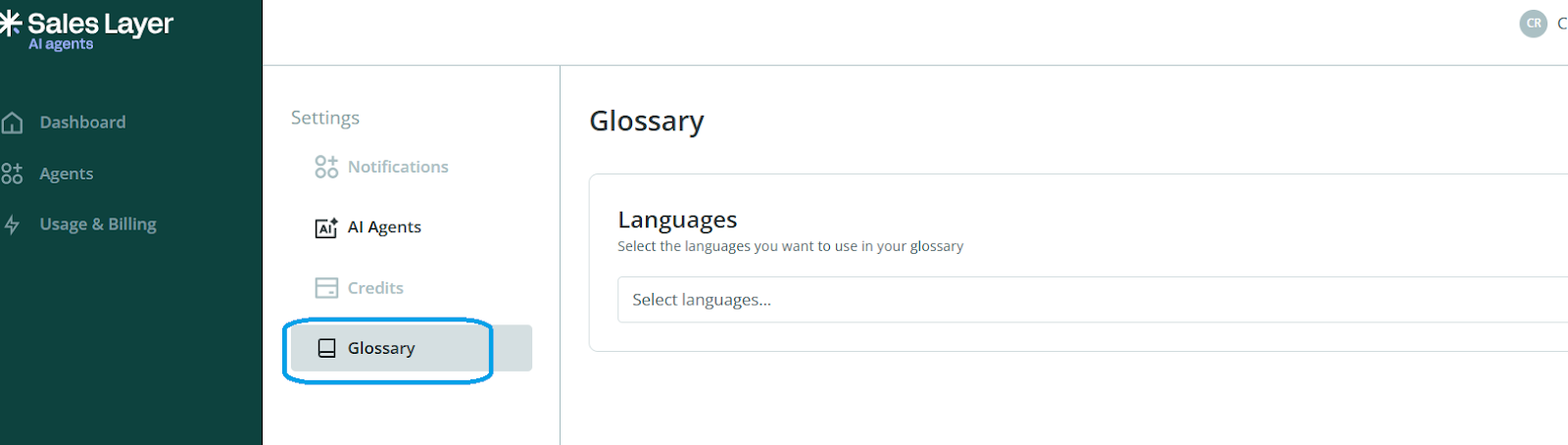
First, select the languages and then add the terms using the Add term button. Once all terms have been added, save the changes with the Save button.
2. Agent Activation
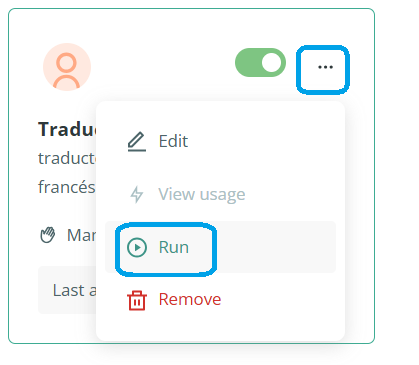
To run an agent, open the menu and select the Run option.
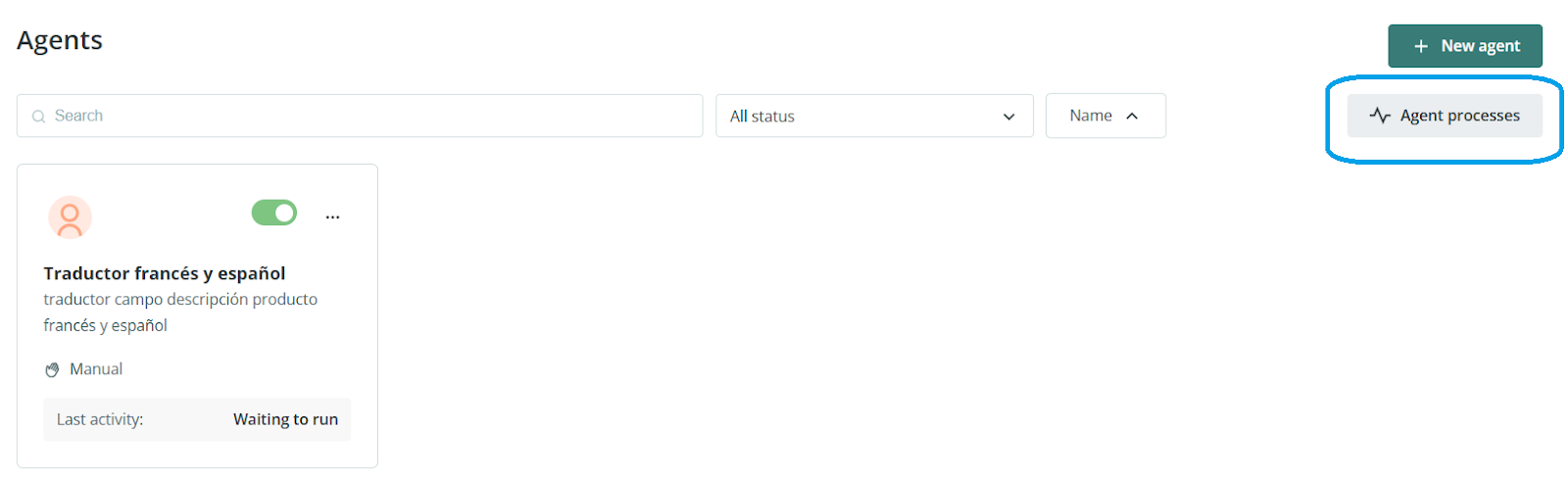
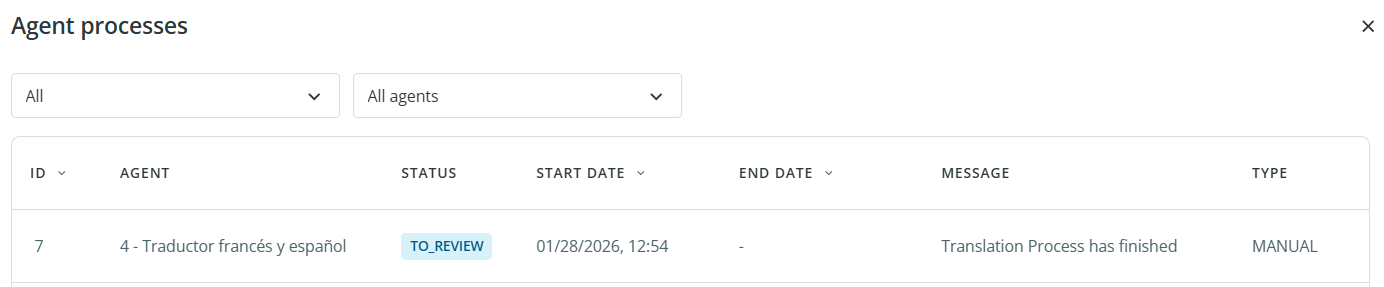
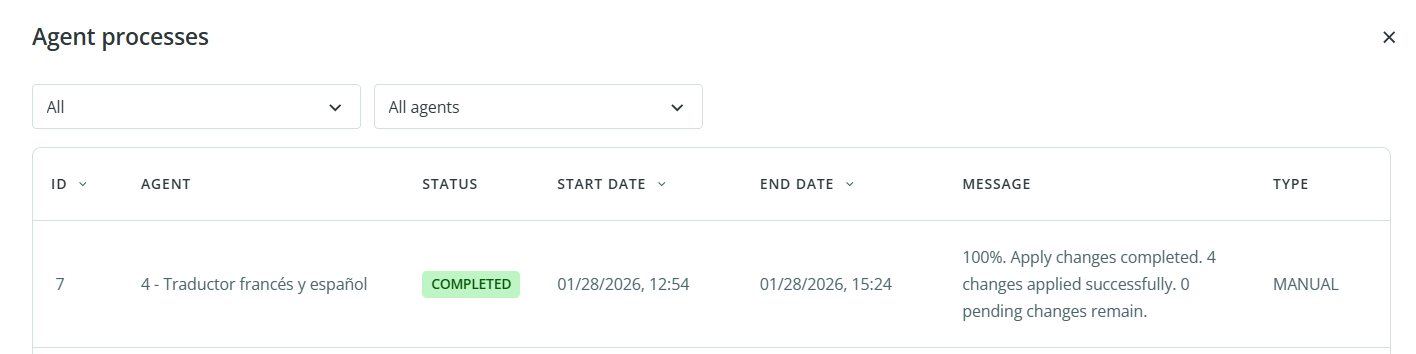
The process will start, and you can check its status in the Agents processes section.
In this section, you can view all active and completed processes.
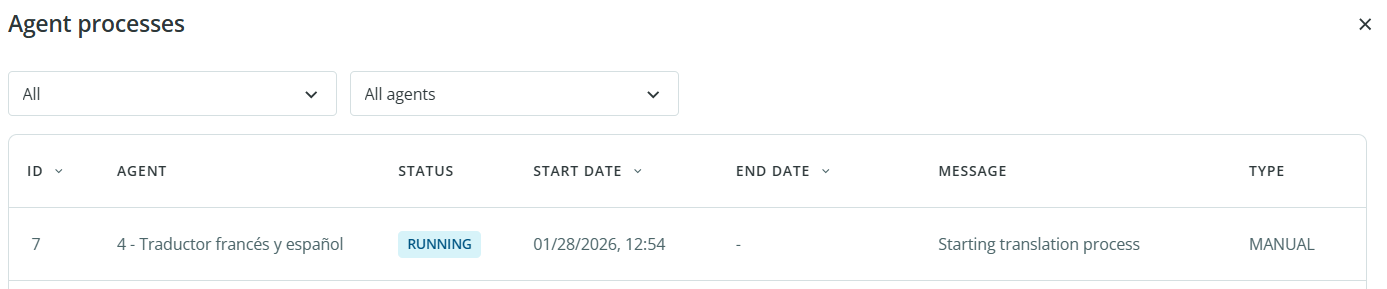
There are three possible statuses:
- Running: the process is in progress
- To review: the option to review changes before applying them to production is enabled
- Completed: the process has finished
3. Review
To review changes, return to the control panel and click the agent’s Review changes button.
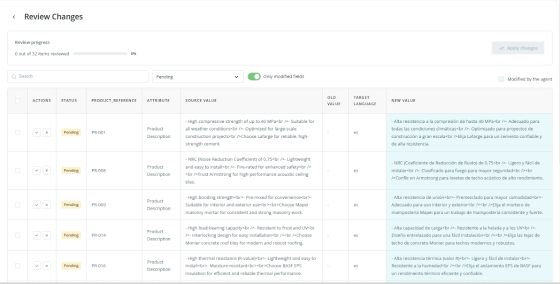
In this tab, you can see the translations performed by the agent according to the configured parameters.
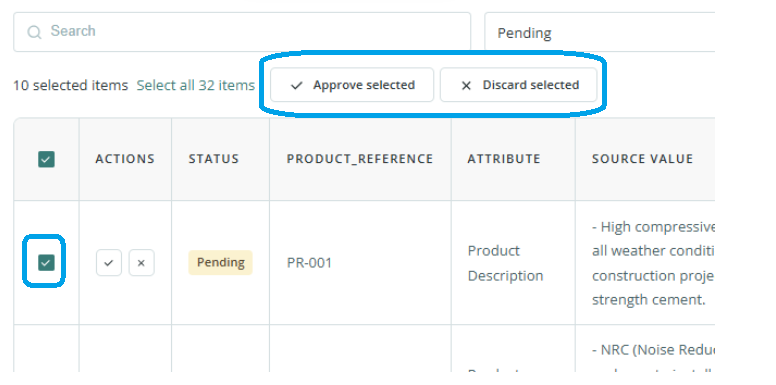
You can approve or discard changes individually using the approve or cancel icons shown for each item.

You can also select multiple items at once to approve or discard them in bulk by checking their boxes and choosing one of the options in the top menu.
You can verify the prompt and glossary used by the agent during translation by clicking the icon on the right.

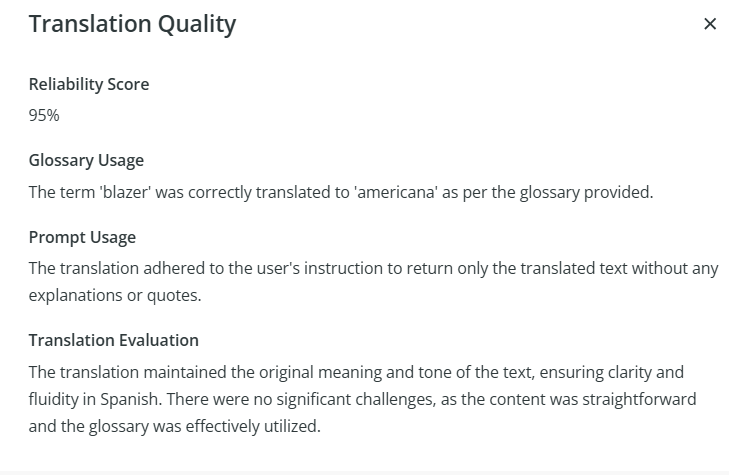
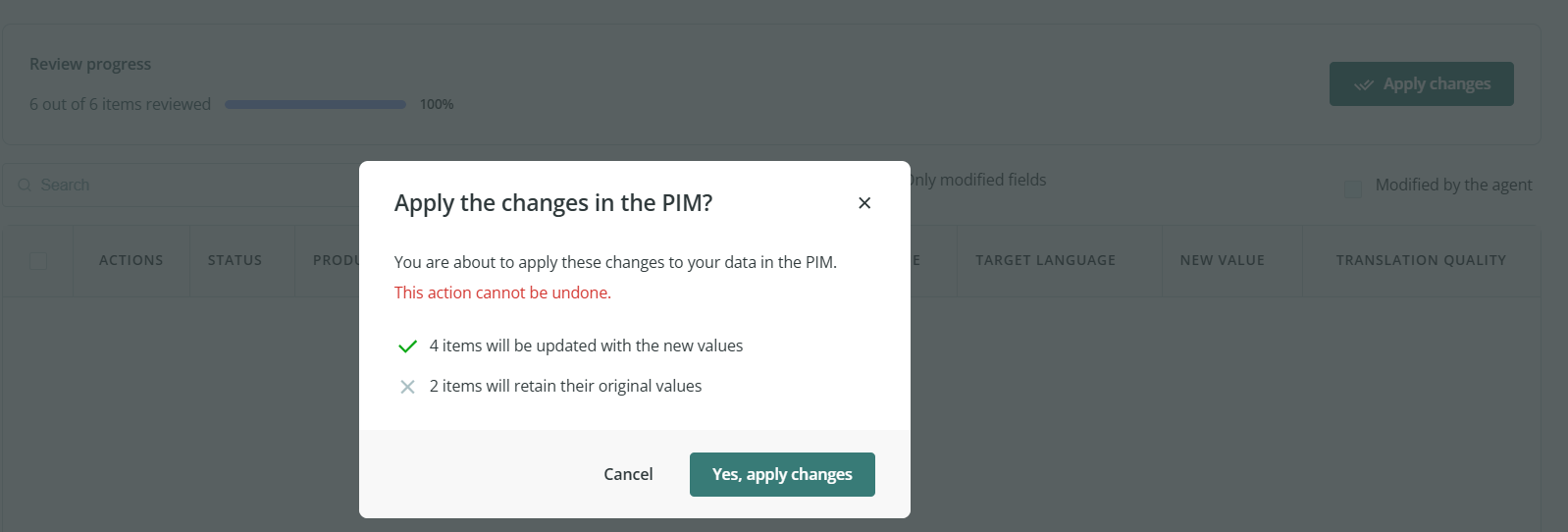
Once all changes have been approved or discarded, a button will appear in the upper-right corner to apply the changes.

Before applying the changes, a message will be displayed indicating how many items will be modified and how many will remain unchanged if some were discarded.
Once approved, if you return to the Agent processes section, you will see that the status has changed to Completed.
Note: Credit consumption is calculated based on the number of processed attributes. Therefore, any change made will be counted toward credit usage, even if that change is later discarded.
4. Credit Consumption
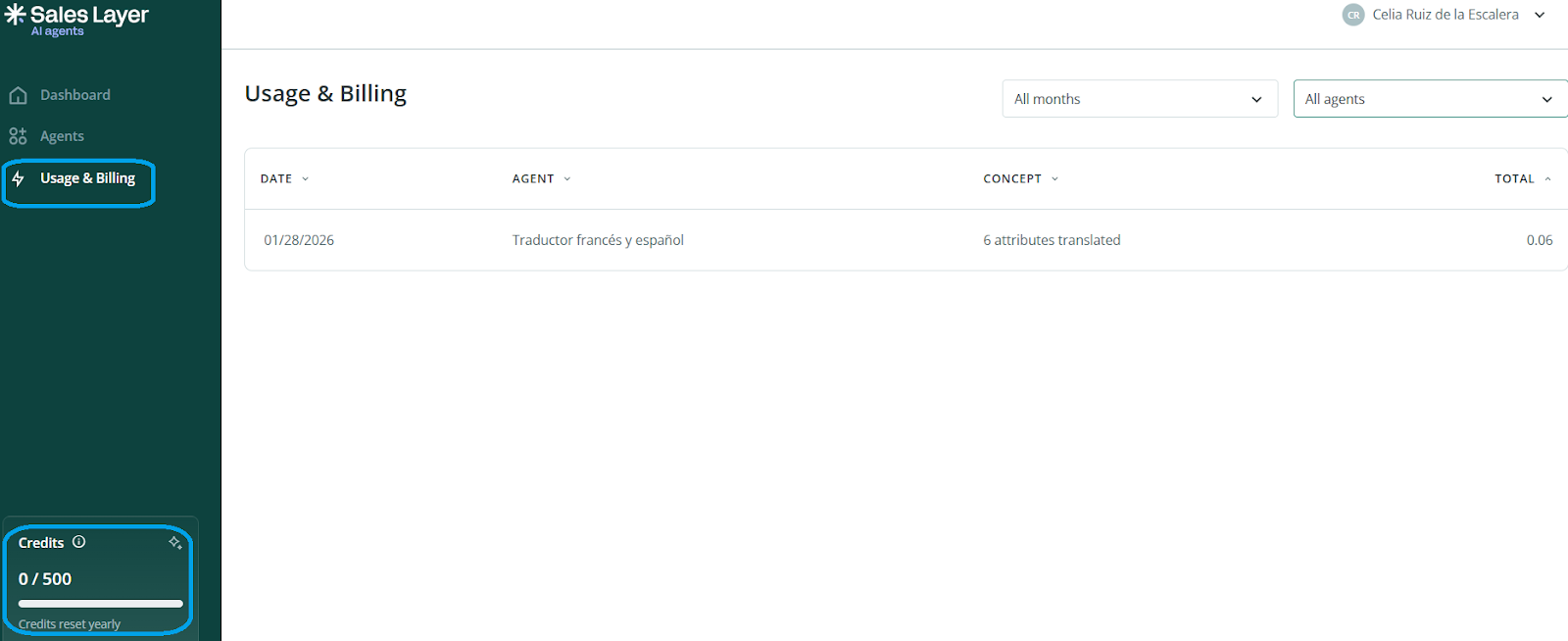
To view credit usage, go to the Usage & Billing section, where consumption is displayed by agent and date.
Using the filter in the upper-right corner, you can filter by month and agent if you have multiple agents.
You can also check your available credit in the lower-left corner.
Specifications:
- A credit is defined as the basic unit of service consumption.
- 1 credit = 100 attributes processed in items by an AI agent in a single execution.
- Credits are sold in prepaid packages, and additional packages can be purchased at any time.
- Credits expire annually.
- To run an AI agent process, you must have sufficient credits available. If you do not have enough credits, the system will notify you before executing the operation.
- The functionality will be linked to each client’s own OpenAI account. To try it out, an initial package of 5,000 free attributes connected to our OpenAI is offered. Contact our Support department or your Customer Success Manager to activate the functionality on your account. If you already have your own OpenAI account, you can test it directly by entering your credentials in the Settings section.
Upcoming AI Agents
As mentioned earlier, the AI Agents functionality will soon incorporate additional agents that will enable the following:
- Smart business rules agent: This agent will automatically generate content in specific fields based on existing information in other fields. It will apply various logic rules, similar to formulas already used in connectors, to efficiently and automatically complete fields.